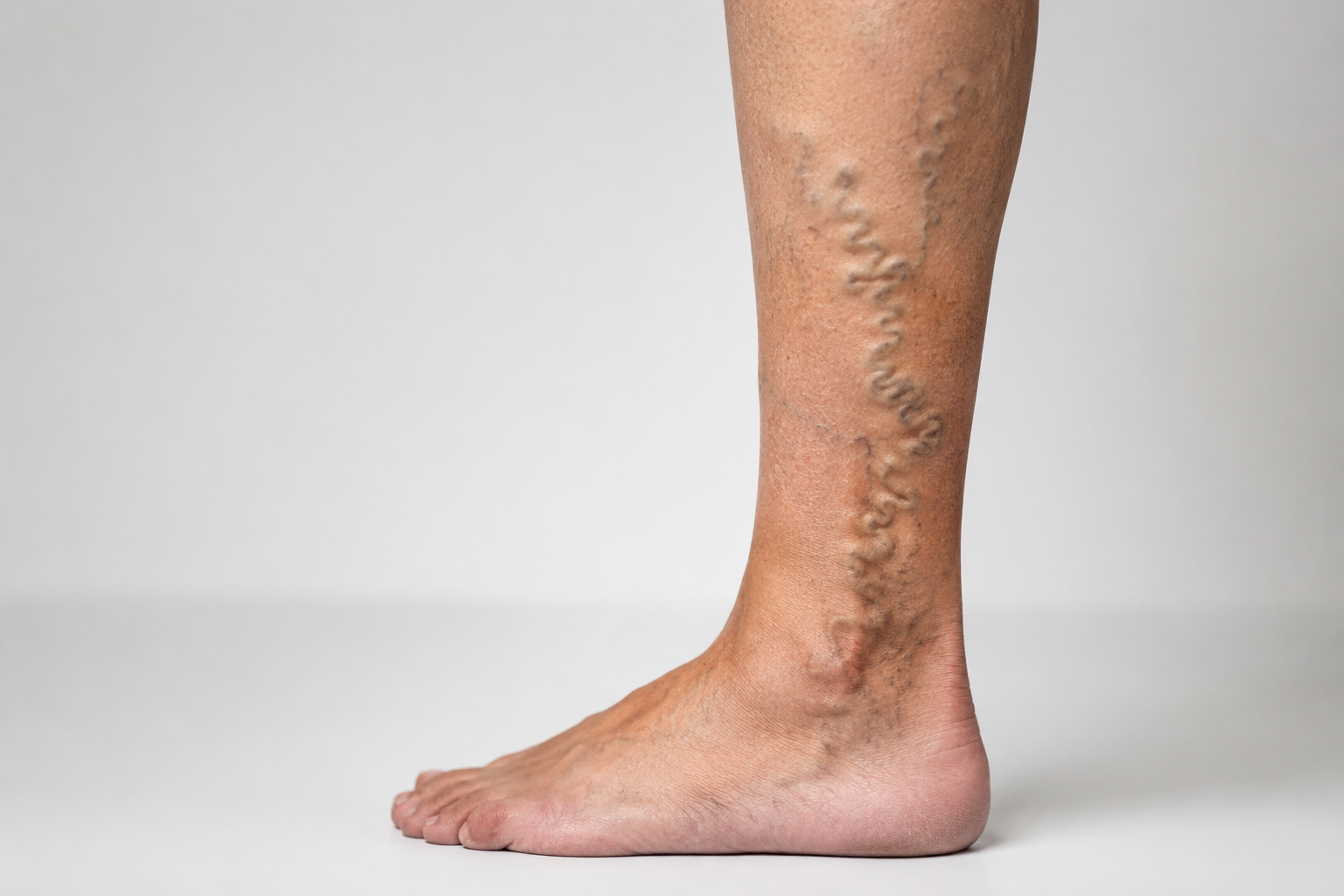
Varicose vein ulcer treatment in Surat at Elegance Diabetic Foot & Ulcer Clinic combines compression therapy, advanced wound dressings, and correction of the faulty leg veins causing the ulcer. This approach heals the venous leg ulcer, relieves symptoms, and treats the underlying vein disease so the ulcer is less likely to return.
A varicose vein ulcer is a wound that will not heal on its own, because the vein problem behind it keeps the pressure high. This guide explains what a varicose vein ulcer is, why varicose veins develop, and how it is treated in Surat - targeting both the ulcer and its cause.
What is a varicose vein ulcer?
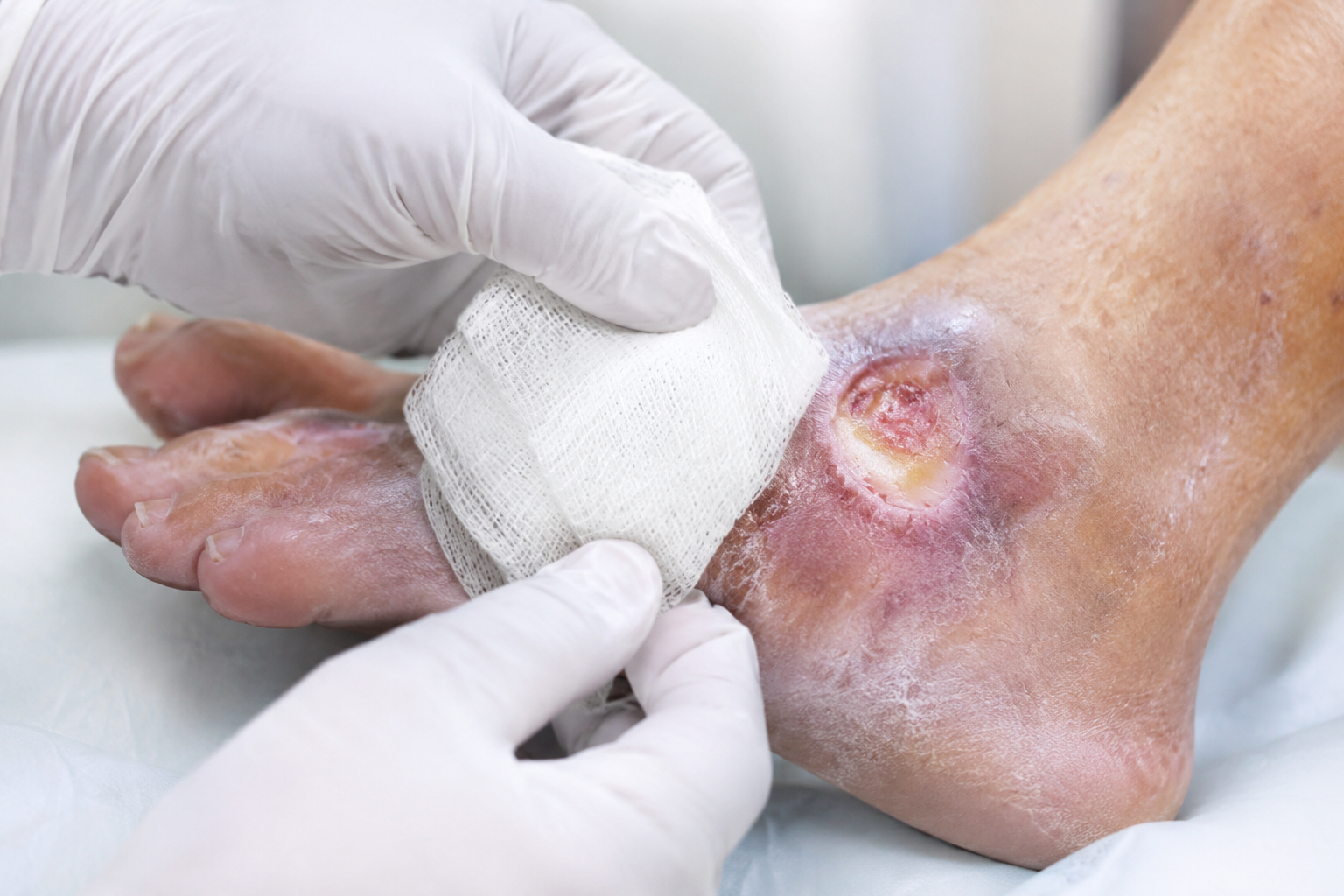
A varicose vein ulcer, also called a venous leg ulcer, is an open sore that usually forms on the lower leg near the ankle when varicose veins and weak vein valves raise the pressure in the leg. That high pressure damages the skin until it breaks down into a slow-healing wound.
It is the most common type of leg ulcer and the final stage of untreated vein disease. These ulcers are typically shallow, irregular, and weepy, and they rarely heal until the underlying vein problem is addressed. Elegance runs a dedicated non-diabetic ulcer clinic for exactly these wounds.
Why do varicose veins develop and lead to ulcers?
Varicose veins develop when the one-way valves inside the leg veins weaken and stop closing properly. Blood then flows backward and pools in the lower leg, raising the pressure inside the veins - a problem that starts long before the veins become visibly twisted.
Over time this rising pressure moves through predictable stages, and an ulcer is the last one:
- Spider veins - fine surface veins, often the first sign.
- Varicose veins - larger, rope-like, bulging veins.
- Varicose eczema - itchy, discoloured, hardened skin around the ankle.
- Varicose vein ulcer - the skin finally breaks down into an open wound.
Long hours of standing, pregnancy, family history, ageing, and being overweight all raise the risk. Catching the problem at an earlier stage prevents it from ever reaching an ulcer.
What are the symptoms of a varicose vein ulcer?
The main sign is a shallow, slow-healing wound low on the leg, usually around the inner ankle, often with surrounding skin changes. The leg frequently aches, swells, and feels heavy, especially at the end of the day.
- An open, weepy wound near the ankle that will not heal.
- Aching, heaviness, or swelling in the lower leg.
- Brown or purple skin discolouration around the ankle.
- Itchy, flaky, or hardened skin (varicose eczema).
- Visible varicose veins above the wound.
Any leg wound that has not healed in a few weeks - or shows redness, increasing pain, pus, or a bad smell - should be assessed promptly, as it may be infected.
How is a varicose vein ulcer treated in Surat?
Varicose vein ulcer treatment in Surat works on two fronts at once: healing the open wound and correcting the vein disease driving it. Treating only the wound leaves the high pressure in place, which is why these ulcers so often return without full care.
At Elegance Diabetic Foot & Ulcer Clinic, treatment usually combines compression, advanced wound care, and a procedure to fix the faulty veins. The exact plan depends on the ulcer's size, infection, and the state of the veins, confirmed with a scan of the leg's blood flow (vascular assessment).
What are the treatment options for a varicose vein ulcer?
Treatment ranges from compression and dressings that heal the wound to minimally invasive procedures that correct the veins. Most patients need a combination. The table below summarises the main options.
| Treatment | What it does |
|---|---|
| Compression therapy | Bandages or stockings that lower vein pressure - the cornerstone of healing |
| Advanced wound dressings | Keep the wound moist, control fluid and bacteria, and speed healing |
| Endovenous ablation (laser / RFA) | Minimally invasive closure of the faulty vein to remove the cause |
| Sclerotherapy | Injection that seals smaller diseased veins |
| Leg elevation & calf exercise | Reduce swelling and help blood return from the leg |
| Skin care & infection control | Protect surrounding skin and clear any infection so the ulcer can close |
Can a varicose vein ulcer be cured, or will it come back?
Yes, most varicose vein ulcers can be healed, and the risk of recurrence drops sharply when the underlying vein disease is corrected, not just the wound. Ulcers treated with dressings alone often return, because the high vein pressure that caused them is still there.
By combining wound healing with a procedure to close the faulty veins and ongoing compression, treatment tackles the root cause. Continuing to wear compression stockings after healing is one of the most effective ways to stop a venous ulcer from coming back.
How long does a varicose vein ulcer take to heal?
Healing time varies with the ulcer's size, how long it has been present, and whether infection or vein disease is treated. Many venous ulcers improve steadily over weeks to a few months once proper compression and wound care begin.
Starting treatment early makes a large difference - a small, recent ulcer heals far faster than a large, long-standing one. Delayed care allows the wound to grow, become infected, and take much longer to close.
Why choose Elegance Diabetic Foot & Ulcer Clinic in Surat?
Elegance Diabetic Foot & Ulcer Clinic in Surat, led by Dr. Ashutosh Shah, treats varicose vein ulcers with complete care under one roof - vascular assessment, compression, advanced dressings, and vein correction. As a plastic and microvascular surgeon, Dr. Shah manages even large or long-standing leg ulcers, including those that need reconstruction to close. The focus is on healing the ulcer and fixing the cause, so patients across Surat get lasting results rather than a wound that keeps returning.
Book varicose vein ulcer treatment in Surat
If you have a leg ulcer that will not heal or visible varicose veins with skin changes, early treatment can heal the wound and protect your leg. Book a consultation with Elegance Diabetic Foot & Ulcer Clinic in Surat, or send a photo of your leg on WhatsApp for quick guidance on your next step.
This article is for general education only and is not a substitute for professional medical advice, diagnosis, or treatment. Please consult Dr. Ashutosh Shah or a qualified specialist about your individual condition.
quiz Frequently Asked Questions
This article is general education, not a diagnosis. If you have a diabetic foot wound, please have it assessed in person. Send a photo on WhatsApp or book a consultation.
About the Author
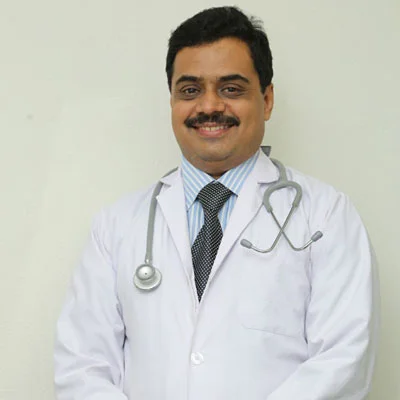
Dr. Ashutosh Shah, Plastic, Reconstructive & Diabetic Foot Surgeon, Elegance Diabetic Foot & Ulcer Clinic, Surat
Dr. Ashutosh Shah is a board certified plastic and reconstructive surgeon with over 22 years of experience and more than 10,000 limbs and feet saved. He founded Elegance Diabetic Foot & Ulcer Clinic, India's first chain of clinics dedicated to foot care, with centres in Surat and OPD partners across South Gujarat. He is known for a limb first approach, safe wound care and ethical, natural results.