
Written by Dr. Ashutosh Shah, Plastic & Microvascular Surgeon - Diabetic Foot & Limb Salvage Specialist, Elegance Diabetic Foot & Ulcer Clinic (EDFC). Practicing since 2004 (22+ years). Read full bio.
Medically reviewed by Dr. Ashutosh Shah · Published 4 August 2026 · Last reviewed 4 August 2026.
Necrotizing fasciitis foot in Kakinada is a rapidly spreading, life threatening infection of the tissue under the skin that needs emergency hospital care within hours. Warning signs include severe pain, fast spreading redness, swelling, blisters, dark skin and fever. Do not wait at home, go to an emergency department immediately.
Most foot infections give you time to think. This one does not. Necrotizing fasciitis can travel along the tissue planes of the foot and leg in a matter of hours, and every hour of delay costs tissue, function and sometimes life. This guide explains what to look for, what happens in hospital, and how the foot is saved when treatment starts early.
What is necrotizing fasciitis of the foot?
Necrotizing fasciitis of the foot is a severe bacterial infection that spreads through the fascia, the sheet of connective tissue that wraps the muscles, and kills the tissue as it goes. It is often called a flesh eating infection, although the bacteria destroy tissue by releasing toxins and cutting off its blood supply rather than by eating it.
Because the infection travels in a deep layer, the skin on the surface can look far less alarming than the damage underneath. That mismatch is exactly what makes it dangerous. It sits at the most severe end of the foot conditions we treat, alongside spreading gangrene.
Why is necrotizing fasciitis foot in Kakinada a medical emergency?
Necrotizing fasciitis foot in Kakinada is a medical emergency because the infection spreads faster than antibiotics can control it, and survival and limb salvage both depend on surgery being done early. Clinical guidelines are consistent on this point, urgent surgical removal of the dead tissue is the treatment that changes the outcome.
Antibiotics alone cannot reach dead tissue, because dead tissue has no blood supply to carry the drug into it. Waiting overnight to see if it settles, or trying dressings and tablets at home, is the single most common reason a foot that could have been saved is lost.
What causes necrotizing fasciitis in the foot?
Necrotizing fasciitis in the foot is usually caused by bacteria entering through a break in the skin, often a small one. In our practice the common entry points are a diabetic foot ulcer, a crack between the toes, a thorn or nail injury, or a burst blister that was walked on.
- Diabetic foot ulcers: an existing open wound is the most frequent starting point.
- Minor injuries: thorn pricks, nail punctures, cuts from walking barefoot.
- Cracked heels and web space fungal infection: tiny breaks that let bacteria in.
- Injections or unsterile procedures on the foot or leg.
- Reduced immunity: poorly controlled diabetes, kidney disease, liver disease, cancer treatment or long term steroids.
- Poor blood supply: peripheral artery disease, which slows healing and defence.
People with diabetes are at higher risk for two reasons together, nerve damage means the original injury is not felt, and high blood sugar weakens the body's ability to fight infection.
What are the warning signs of necrotizing fasciitis in the foot?
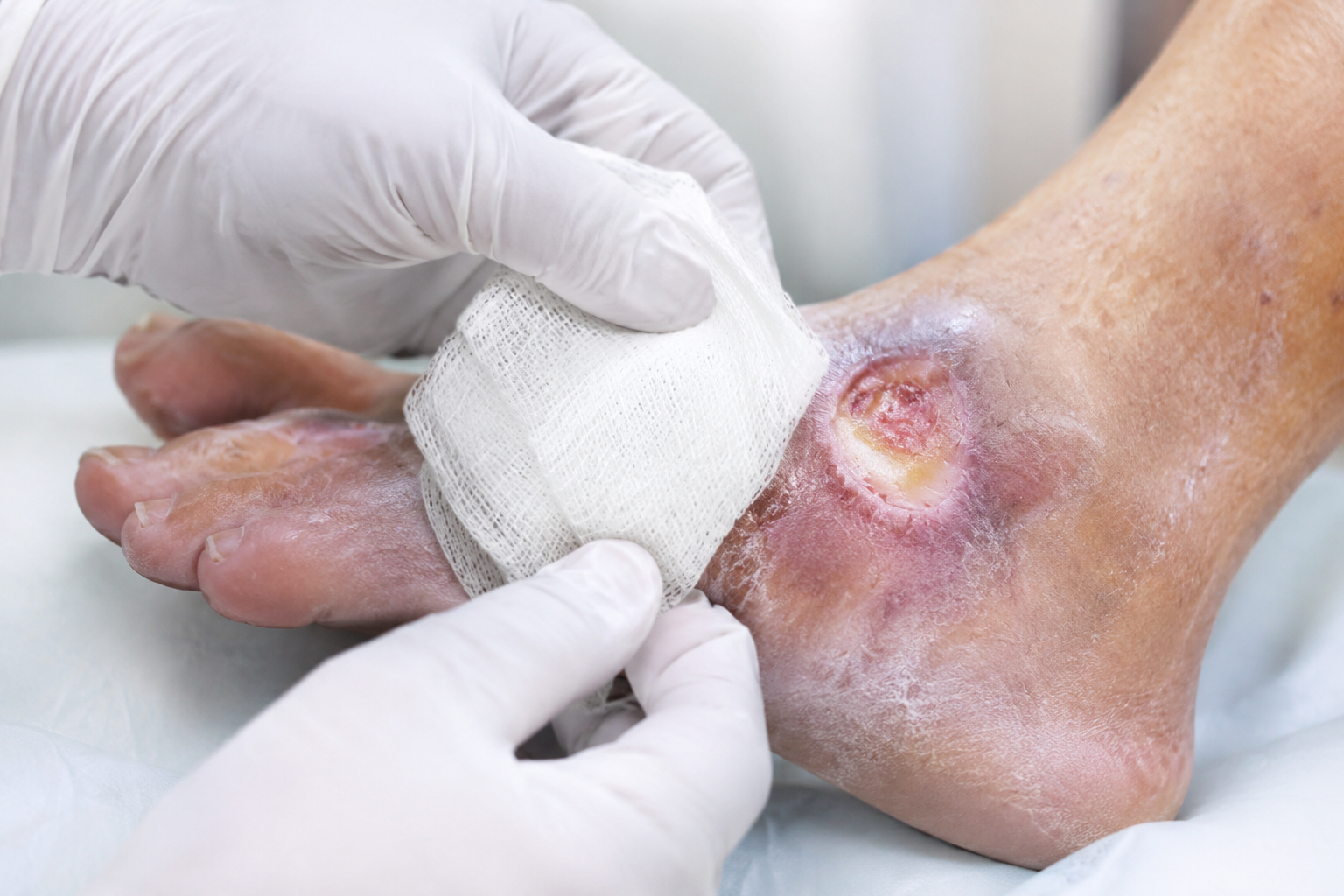
The warning signs of necrotizing fasciitis in the foot are severe pain that seems out of proportion to how the foot looks, redness and swelling that spread visibly within hours, skin that turns purple, grey or black, blisters filled with dark fluid, and fever with feeling very unwell.
- Pain out of proportion to the visible wound, or in a numb diabetic foot, sudden new pain.
- Redness and swelling that advance up the foot or ankle over hours, not days.
- Tight, shiny, hard swelling of the foot.
- Skin colour change to dusky purple, grey or black.
- Blisters or bullae containing dark or blood stained fluid.
- Foul smelling discharge or a crackling feeling under the skin.
- Fever, chills, confusion, low blood pressure or a racing pulse.
One caution for diabetic patients, neuropathy can blunt the pain that normally warns you. In a numb foot the infection may announce itself only through swelling, discolouration, discharge or a sudden rise in blood sugar with feeling unwell.
How is it different from cellulitis or an ordinary foot infection?
Necrotizing fasciitis differs from cellulitis mainly in speed, pain and how sick the person feels. Cellulitis is a skin infection that responds to antibiotics over days, while necrotizing fasciitis spreads through deep tissue in hours and needs surgery. Only a doctor can tell them apart reliably, so any doubt means going to hospital.
| Feature | Cellulitis or ordinary infection | Necrotizing fasciitis |
|---|---|---|
| Speed of spread | Gradual, over days | Visible spread within hours |
| Pain | Matches how the foot looks | Severe, out of proportion, or sudden in a numb foot |
| Skin | Red, warm, tender | Dusky, purple or black patches, dark blisters |
| General health | Usually feels reasonably well | Fever, confusion, very unwell, unstable |
| Treatment | Antibiotics and wound care | Emergency surgery plus IV antibiotics and intensive care |
How is necrotizing fasciitis of the foot diagnosed?
Necrotizing fasciitis of the foot is diagnosed mainly on clinical examination supported by blood tests, and confirmed at surgery. Doctors look at how fast the infection is moving, check blood counts, kidney function, inflammatory markers and blood sugar, and take cultures. Imaging may be used, but it must never delay surgery.
The definitive answer comes from surgical exploration, where the surgeon can see whether the fascia is dead and how far the infection has travelled. This is why an experienced surgical team matters, the decision to operate is often made on judgement before any scan is available.
How is necrotizing fasciitis of the foot treated?
Necrotizing fasciitis of the foot is treated with emergency surgical debridement, removal of all dead tissue, combined with strong intravenous antibiotics and support for the whole body. More than one operation is usually needed, and reconstruction follows only once the infection is fully controlled.
- Resuscitation: IV fluids, blood sugar control, oxygen and monitoring, often in intensive care.
- Emergency debridement: all dead fascia, fat and muscle are removed, with drainage of pus.
- Broad spectrum IV antibiotics, later narrowed once culture results arrive.
- Repeat inspection and debridement every 24 to 48 hours until the tissue is clean.
- Blood supply assessment and, if needed, vascular treatment to restore circulation.
- Wound management with negative pressure therapy and advanced dressings, part of non-surgical wound management.
- Reconstruction: skin grafts or flap surgery to close the defect and rebuild a usable foot.
In our diabetic foot practice we see the same pattern repeatedly, patients who reach a surgical team on day one usually keep a functional foot, while those who arrive after three or four days of home treatment face far bigger surgery. Reconstructive options after the infection settles are covered under diabetic foot surgery.
Can the foot or leg be saved after necrotizing fasciitis?
Yes, the foot or leg can often be saved after necrotizing fasciitis if surgery is done early and the blood supply is good. Limb salvage becomes harder when treatment is delayed, when the infection reaches the deep muscle compartments of the leg, or when circulation is severely blocked.
Amputation is not the first plan, it is what is done when there is no other way to save the person's life. A limb first approach means aggressive early surgery, restoring blood flow, and then rebuilding the foot so it can bear weight again.
How can necrotizing fasciitis of the foot be prevented?
Necrotizing fasciitis of the foot is prevented by treating small foot wounds properly and early, controlling blood sugar, and never walking barefoot. Most cases begin as a minor injury or ulcer that was left too long, so early wound care is the real prevention.
- Check both feet daily, including between the toes and under the sole.
- Never walk barefoot, indoors or outdoors, if you have diabetes.
- Get any ulcer, crack or blister assessed rather than treating it at home for weeks.
- Treat fungal infection between the toes, it opens the door for bacteria.
- Keep blood sugar controlled and attend regular preventive foot care checks.
- Avoid home surgery, no cutting corns, calluses or nails yourself.
When should you go to hospital immediately?
Go to hospital immediately if a foot wound is spreading fast, the pain is severe, the skin is turning purple or black, there are dark blisters or foul discharge, or you have fever and feel very unwell. Same day emergency assessment is essential, do not wait for a clinic appointment.
If you are unsure, treat it as an emergency. A wasted trip to hospital costs an evening. A missed necrotizing fasciitis costs a limb, and sometimes a life.
Necrotizing fasciitis and severe foot infection care for Kakinada
Elegance Diabetic Foot & Ulcer Clinic (EDFC) manages severe foot infections, gangrene, ulcers and limb salvage from its centre in Surat, and is expanding diabetic foot and limb salvage care to Kakinada. If you suspect necrotizing fasciitis foot in Kakinada, go to the nearest emergency department first, then contact our team for specialist opinion, reconstruction planning and follow up care.
For wounds that are not an emergency, you can send a clear photo of the foot to our team on WhatsApp for guidance and book a foot assessment. You can also follow EDFC on Facebook, Instagram and YouTube for foot care guidance and real limb salvage stories.
Act within hours, not days
With necrotizing fasciitis, time is tissue. If a foot infection is spreading quickly or the skin is changing colour, get to an emergency department now, and book a specialist foot assessment with Elegance Diabetic Foot & Ulcer Clinic for ongoing limb salvage and reconstruction care.
Medical disclaimer: This article is for educational purposes only and is not a substitute for professional medical diagnosis or treatment. Suspected necrotizing fasciitis is a medical emergency and needs immediate hospital assessment. Please consult Dr. Ashutosh Shah or a qualified specialist about your condition. For authoritative guidance, see the NHS guide to necrotising fasciitis and the IWGDF diabetic foot guidelines.
quiz Frequently Asked Questions
This article is general education, not a diagnosis. If you have a diabetic foot wound, please have it assessed in person. Send a photo on WhatsApp or book a consultation.
About the Author

Dr. Ashutosh Shah, Plastic, Reconstructive & Diabetic Foot Surgeon, Elegance Diabetic Foot & Ulcer Clinic, Surat
Dr. Ashutosh Shah is a board certified plastic and reconstructive surgeon with over 22 years of experience and more than 10,000 limbs and feet saved. He founded Elegance Diabetic Foot & Ulcer Clinic, India's first chain of clinics dedicated to foot care, with centres in Surat and OPD partners across South Gujarat. He is known for a limb first approach, safe wound care and ethical, natural results.