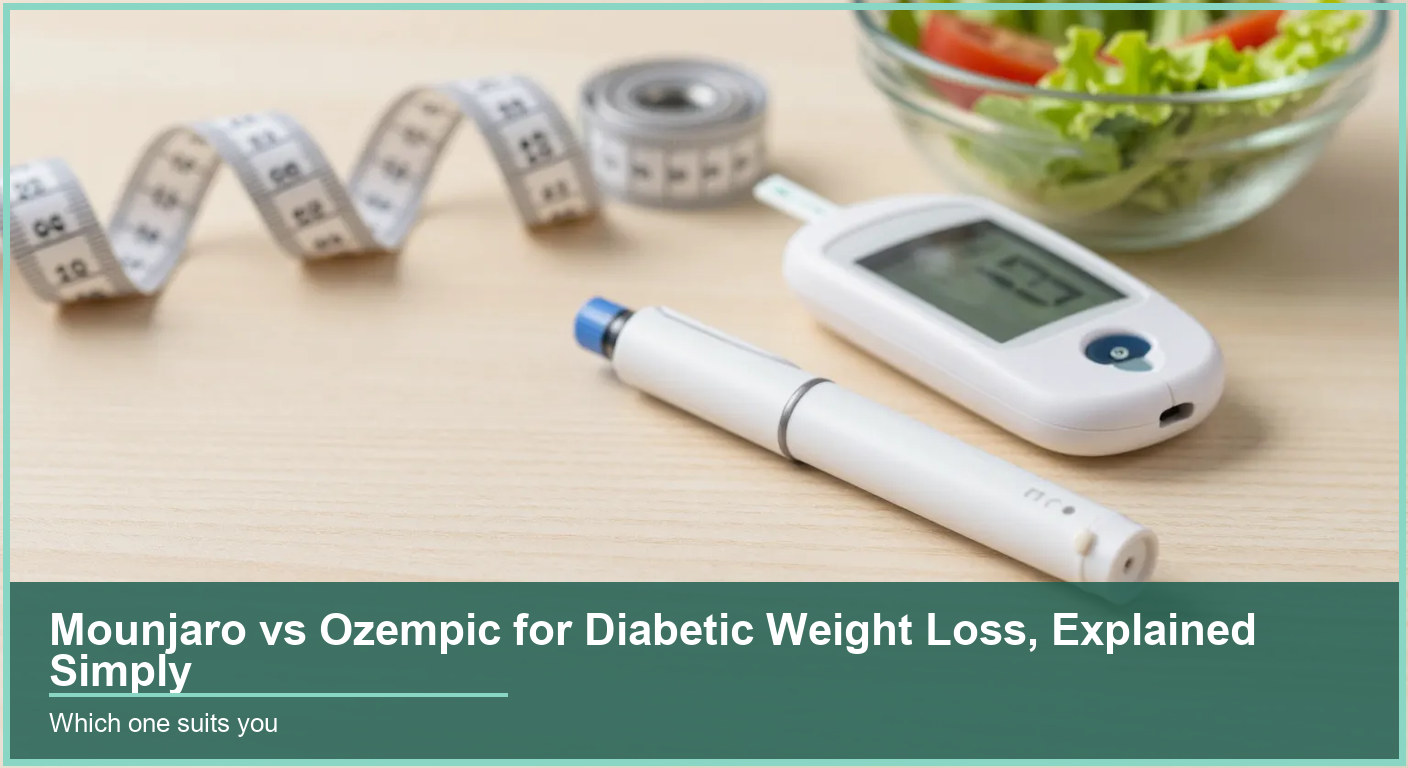
When patients compare Mounjaro vs Ozempic for diabetic weight loss, the short answer is that both work, yet Mounjaro (tirzepatide) usually produces greater weight reduction, while Ozempic (semaglutide) carries a longer track record in type 2 diabetes. Therefore your doctor should match the drug to your health profile, not to social media buzz.
Moreover, at Elegance Diabetic Foot & Ulcer Clinic (EDFC) we treat these injections as one tool inside a full plan. In addition, weight and sugar control decide how well a foot wound heals, so the choice matters far beyond the weighing scale.
Key Takeaways
- Mounjaro contains tirzepatide and acts on two gut hormone pathways, while Ozempic contains semaglutide and acts on one.
- In head to head research, tirzepatide produced greater average weight loss than semaglutide in adults with type 2 diabetes.
- Both are prescription only weekly injections, and neither replaces diet, activity or daily foot care.
- Nausea, vomiting and constipation are the commonest side effects, and both usually settle as the dose rises slowly.
- Weight loss lowers pressure under the sole and improves healing, so ulcer risk falls.
- People with a history of medullary thyroid cancer or pancreatitis must avoid both medicines.
Table of Contents
- What are Mounjaro and Ozempic?
- How do Mounjaro and Ozempic work differently?
- Which gives more weight loss in type 2 diabetes?
- Why does weight loss matter for diabetic foot health?
- What side effects should you expect?
- How much do Mounjaro and Ozempic cost in India?
- Who should not take these injections?
- How EDFC fits these medicines into a bigger plan
- When should you see a doctor?
What are Mounjaro and Ozempic?
Mounjaro and Ozempic are prescription injections used in type 2 diabetes. Mounjaro delivers tirzepatide, a dual GIP and GLP-1 receptor agonist. Ozempic delivers semaglutide, a GLP-1 receptor agonist. Both lower blood sugar and reduce appetite, and both are given once a week under medical supervision, never bought casually online.
GLP-1 receptor agonist: a medicine that copies a natural gut hormone to lower blood sugar, slow stomach emptying and reduce hunger.
Tirzepatide: the active drug in Mounjaro, which acts on two gut hormone receptors, GIP and GLP-1, at the same time.
Both pens are self injected into the abdomen, thigh or upper arm. In addition, the dose starts low and rises in steps, because a slow climb reduces nausea. Meanwhile, the International Diabetes Federation reports that India has among the highest numbers of adults living with diabetes worldwide, which explains why interest in these drugs has grown so quickly here.
How do Mounjaro and Ozempic work differently?
The difference is the number of targets. Ozempic activates one receptor, GLP-1, so it slows digestion, curbs appetite and improves insulin release. Mounjaro activates GLP-1 and GIP together, which appears to improve fat handling as well. As a result, the same weekly injection habit can give different results.
Practically, most patients notice smaller portions and fewer cravings within a few weeks. However, the effect fades once the medicine stops, because appetite signals return to baseline. Therefore doctors treat these drugs as long term therapy, similar to blood pressure tablets, rather than a short course.
Which gives more weight loss in type 2 diabetes?
Current evidence favours Mounjaro. In published head to head research in adults with type 2 diabetes, tirzepatide produced a larger average drop in body weight and HbA1c than semaglutide. However, averages hide individual variation. Some patients respond better to Ozempic, and tolerance, cost and other illnesses often decide the final choice.
Above all, the number on the scale is not the only goal. Falling HbA1c protects nerves, kidneys, eyes and small blood vessels. Similarly, a steady loss of five to ten percent of body weight already improves sugar control for most people, even when the mirror shows little change.
Why does weight loss matter for diabetic foot health?
Extra weight raises pressure under the sole, and high sugar starves tissue of oxygen. Together they turn a small blister into a deep wound. Therefore steady weight loss and better HbA1c reduce ulcer risk, speed healing and lower the chance of amputation. In short, metabolic control is foot protection.
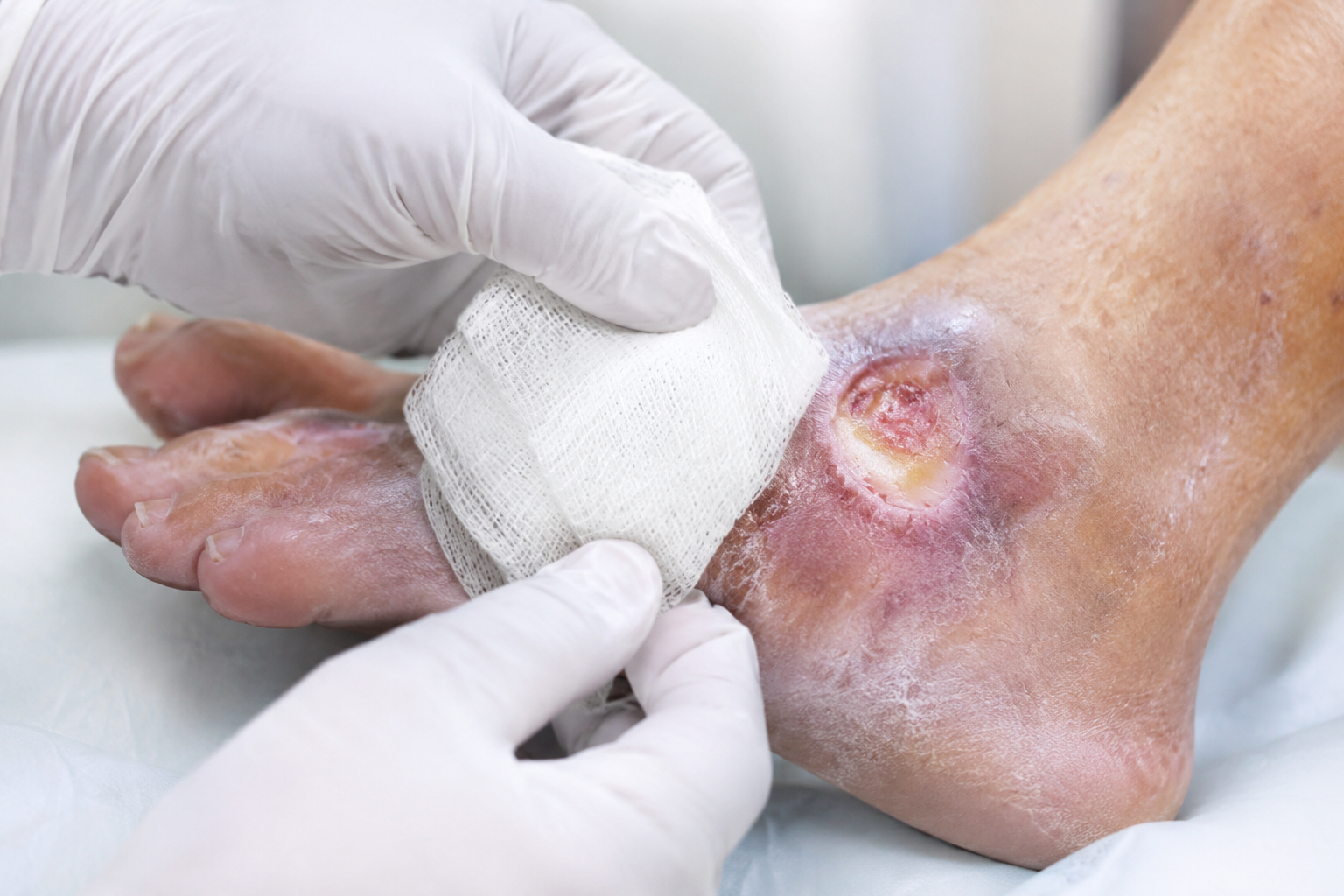
Diabetic foot ulcer: an open wound, usually on the sole or toes, caused by nerve damage and poor circulation in long standing diabetes.
At EDFC we map exactly where that pressure lands using a foot pressure mapping test, then relieve it with diabetic footwear and offloading. Meanwhile, an existing diabetic foot ulcer still needs proper dressings and infection control. No injection heals a wound on its own.
What side effects should you expect?
Most side effects come from the gut. Nausea, vomiting, loose motions, constipation and reflux are common in the first weeks, especially after a dose increase. Meanwhile, rare but serious problems include pancreatitis, gallstones and worsening eye disease. Therefore report ongoing vomiting or severe stomach pain to your doctor immediately.
- Nausea and reduced appetite, usually strongest in the first month.
- Constipation or loose motions, which improve with fluids and fibre.
- Low blood sugar, mainly when combined with insulin or sulfonylureas.
- Loss of muscle along with fat, so protein and light strength work matter.
- Injection site redness, which normally settles within a day.
For diabetic patients, muscle loss deserves special attention. As a result of weaker legs, balance suffers, falls become likelier and fresh foot injuries appear. Therefore ask your dietitian about daily protein targets before you start.
How much do Mounjaro and Ozempic cost in India?
Both are branded weekly injections, so monthly spending typically runs into several thousand rupees at most pharmacies, and Mounjaro generally sits at the higher end. In addition, prices shift with dose, city and supply. Therefore ask your treating team for a written monthly estimate before you start.
Meanwhile, remember the hidden costs on the other side. A single admission for an infected foot wound, or surgery to save a limb, usually costs far more than a year of good metabolic control. For that reason, we frame these medicines as prevention spending rather than luxury spending.
Who should not take these injections?
Neither medicine suits everyone. Doctors avoid both in people with a personal or family history of medullary thyroid cancer, in MEN 2 syndrome, and in past pancreatitis. Similarly, pregnancy, breastfeeding, type 1 diabetes and severe gastroparesis need a different plan. Above all, never start either drug without a prescription.
In addition, patients with an active foot infection, poor nutrition or a healing surgical flap need careful timing. Rapid weight loss during wound healing can work against you. Therefore our surgeons and physicians decide the sequence together, especially around advanced wound care.
How EDFC fits these medicines into a bigger plan
Patients often search for Mounjaro vs Ozempic for diabetic weight loss, and the honest answer at EDFC is that the injection is only the beginning. Our type 2 diabetes remission programme combines medicines with food changes, activity, sleep repair and regular review, because lasting results come from the whole package.
EDFC is India's first chain of clinics dedicated to diabetic foot care, led by Dr. Ashutosh Shah, a plastic, reconstructive and diabetic foot surgeon with more than 22 years of experience and over 10,000 limbs and feet saved. Similarly, our sister unit Elegance Clinic, Surat supports the reconstructive side of complex cases.
Book a consultation at Elegance Diabetic Foot & Ulcer Clinic, or send a photo of your foot concern on WhatsApp for quick guidance, through our contact page.
When should you see a doctor?
See a doctor before starting either injection, and again if problems appear. Seek urgent review for severe stomach pain, persistent vomiting, or signs of low blood sugar. In addition, any new foot blister, black patch, swelling, discharge or numbness needs same week attention, whatever your weight loss progress looks like.
This article is for general information only and does not replace personal medical advice. Please consult a qualified doctor before starting, changing or stopping any diabetes medicine.
quiz Frequently Asked Questions
This article is general education, not a diagnosis. If you have a diabetic foot wound, please have it assessed in person. Send a photo on WhatsApp or book a consultation.
About the Author

Dr. Ashutosh Shah, Plastic, Reconstructive & Diabetic Foot Surgeon, Elegance Diabetic Foot & Ulcer Clinic, Surat
Dr. Ashutosh Shah is a board certified plastic and reconstructive surgeon with over 22 years of experience and more than 10,000 limbs and feet saved. He founded Elegance Diabetic Foot & Ulcer Clinic, India's first chain of clinics dedicated to foot care, with centres in Surat and OPD partners across South Gujarat. He is known for a limb first approach, safe wound care and ethical, natural results.