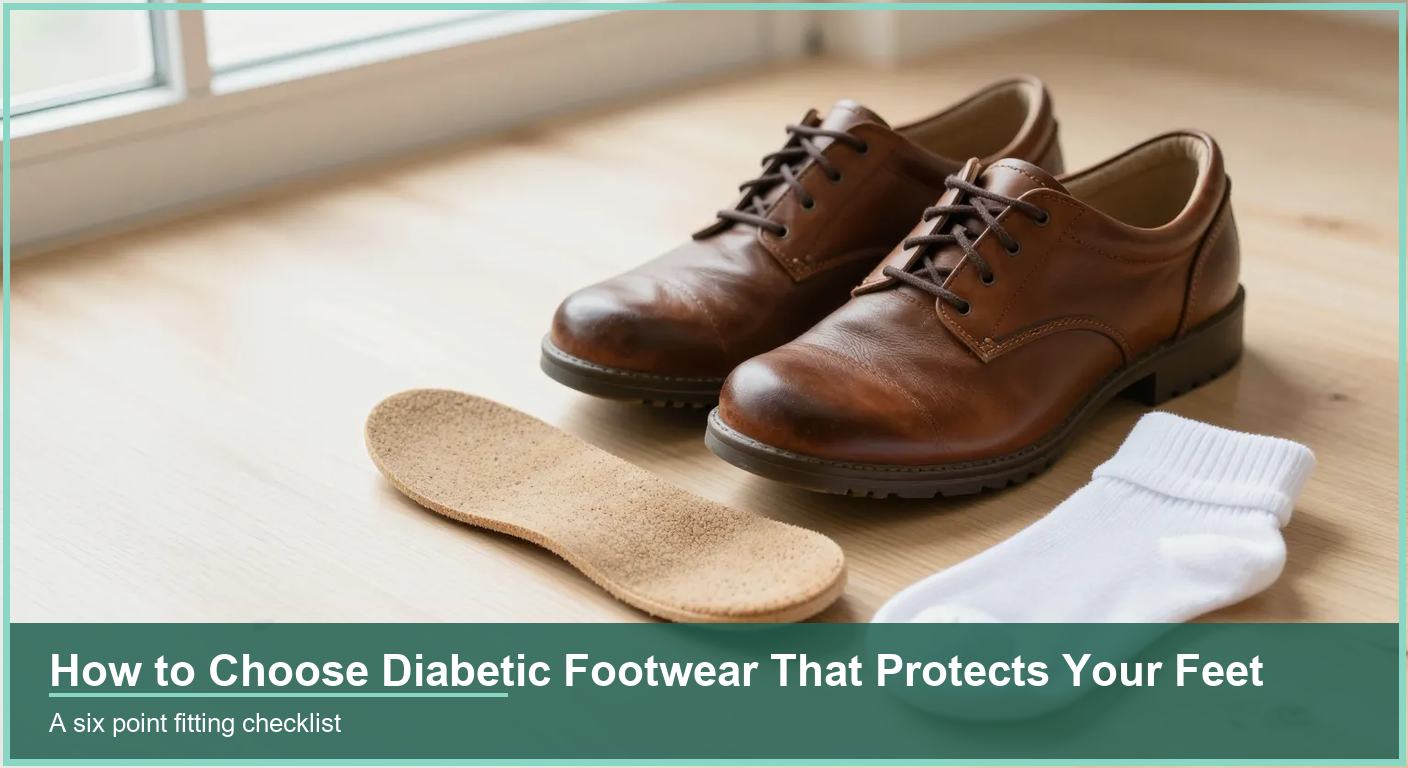
How to choose diabetic footwear comes down to three things: a wide rounded toe box, a soft seam-free lining, and a cushioned removable insole. Therefore, the shoe should fit your foot shape instead of forcing your foot to adapt. Above all, it must protect skin that can no longer feel pressure.
Key Takeaways
- Diabetic footwear protects feet that have lost protective sensation, so comfort alone is not proof of safety.
- A deep, wide toe box and a seam-free lining prevent most rubbing injuries.
- Removable cushioned insoles matter more than the outer shoe material.
- Shoes should be bought in the evening, when feet are at their largest.
- Anyone with deformity, a healed ulcer or Charcot foot needs pressure-guided custom insoles.
- Never break in a new pair, because a diabetic shoe must feel correct on day one.
Table of Contents
- What is diabetic footwear?
- Why does the wrong shoe cause a diabetic foot ulcer?
- How to Choose Diabetic Footwear: A Six Point Checklist
- Which insole works best for diabetic feet?
- How much does diabetic footwear cost in India?
- Common footwear mistakes we see in Surat
- When should you see a diabetic foot specialist?
What is diabetic footwear?
Diabetic footwear is protective shoe wear designed for feet with lost sensation, deformity or poor circulation. Unlike regular shoes, it has a deep, wide toe box, no inner seams, and a soft moulded insole that spreads pressure evenly. As a result, it lowers the chance of blisters, calluses and ulcers.
Diabetic neuropathy: nerve damage from long-standing high blood sugar that dulls or removes pain sensation in the feet.
Regular shoes are built for fashion and grip. In contrast, diabetic shoes are built for pressure control. For example, the sole is slightly rocker shaped, so the foot rolls forward instead of bending sharply at the ball. Similarly, the upper stretches over a bunion rather than pressing into it. Our diabetic footwear and offloading service matches these features to each patient's foot, not to a shoe size alone.
Why does the wrong shoe cause a diabetic foot ulcer?
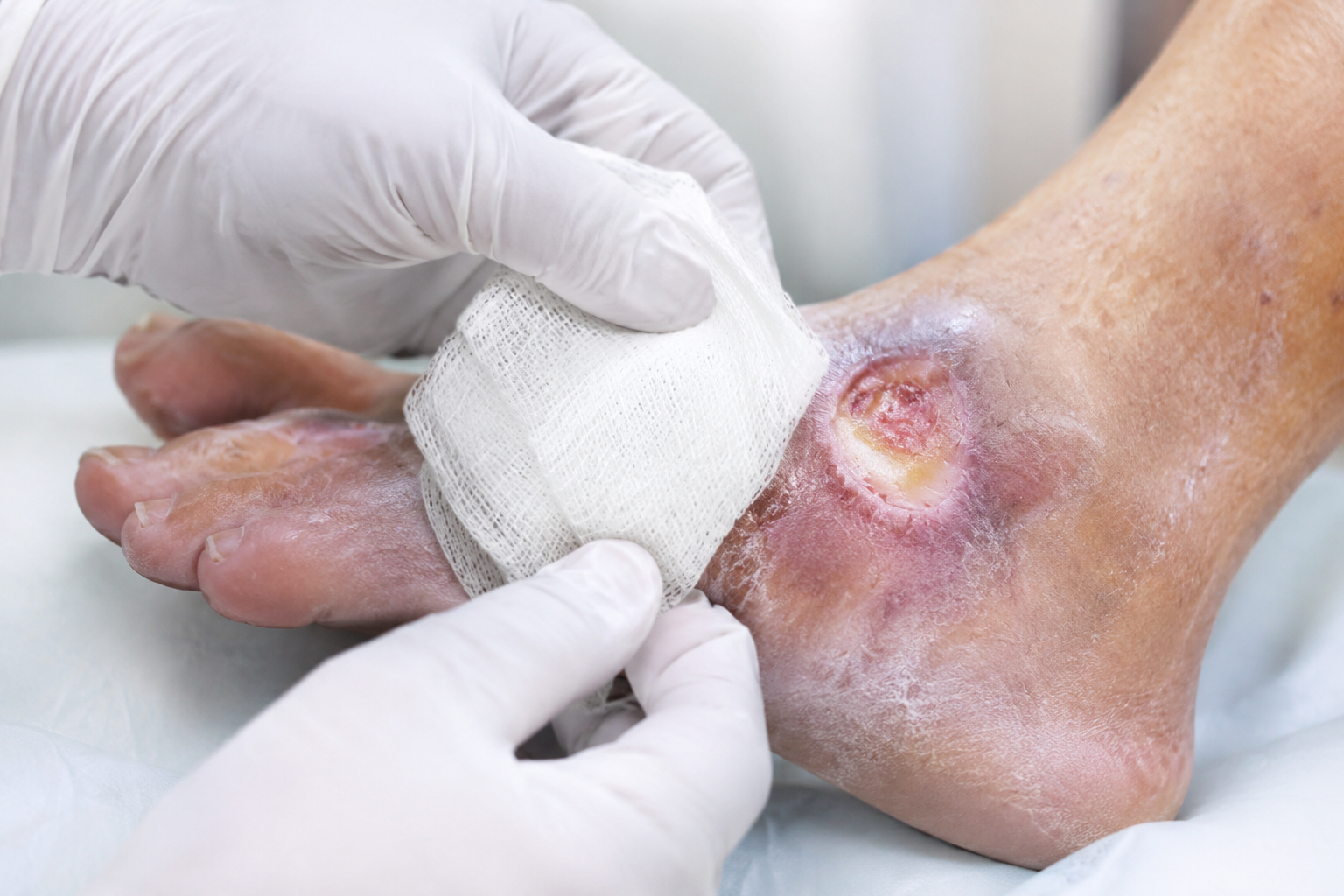
The wrong shoe causes a diabetic foot ulcer because damaged nerves hide the warning pain. Consequently, a tight strap or a hard seam keeps rubbing the same spot for hours. Meanwhile, high pressure builds under the sole, the skin breaks quietly, and infection enters through a wound nobody felt.
International guidelines on the diabetic foot recommend properly fitting therapeutic footwear for every person with loss of protective sensation, foot deformity or a previously healed ulcer. Furthermore, clinical reviews note that footwear-related trauma precedes a large share of new foot wounds. In other words, the shoe is not a small detail. Instead, it is frontline treatment, which is why footwear advice sits alongside our diabetic foot ulcer care from the very first visit.
How to Choose Diabetic Footwear: A Six Point Checklist
Use this checklist in the shop, before you pay. Additionally, wear the socks you normally use, because sock thickness changes the fit.
1. Toe box depth and width
Press down on the shoe front. Your longest toe should sit about a thumb's width from the tip. Moreover, toes must lie flat and side by side, never stacked or squeezed.
2. Seam-free interior
Slide your hand inside. If you feel a ridge, a stitch or a glued edge, reject the pair. Otherwise, that ridge becomes a pressure point within a week.
3. Removable insole
Lift the footbed out. Consequently, you can replace it later with a medical insole without buying new shoes.
4. Firm heel counter and closed back
Squeeze the heel cup. It should resist, not collapse. In addition, a closed back stops the foot sliding forward on Surat's uneven footpaths.
5. Adjustable fastening
Choose laces or velcro over slip-ons. Therefore, you can loosen the shoe on days when swelling increases.
6. Light, cushioned, non-slip sole
A shock-absorbing sole reduces impact at every step. Similarly, a textured tread lowers fall risk during monsoon months.
One rule matters above all: correct on day one. Diabetic shoes are never broken in, because the breaking-in period is exactly when the skin breaks instead.
Which insole works best for diabetic feet?
The best insole is the one built from your own pressure map. Typically, low-risk feet do well with readymade microcellular rubber or EVA insoles. However, feet with deformity, callus or a healed wound need custom moulded insoles that lift load away from the danger zone. Therefore, measurement beats guesswork here.
Offloading: shifting body weight away from a high-pressure or wounded area of the foot so that tissue can heal and stay intact.
At EDFC we map barefoot and in-shoe pressure using a pedobarogram foot pressure test. The scan shows exactly where load concentrates, usually under the big toe or the ball of the foot. Afterwards, the insole is shaped to relieve those points. For patients with a collapsed arch or Charcot foot, this step is not optional, because ordinary shoes simply cannot hold that foot shape safely.
How much does diabetic footwear cost in India?
Diabetic shoes in India typically cost between about 1,500 and 6,000 rupees per pair at most clinics and specialist stores. Meanwhile, readymade insoles usually add a few hundred rupees, while custom pressure-guided insoles cost more. Nevertheless, one good pair still costs far less than treating a single infected ulcer.
Prices vary with material, Indian or imported manufacture, and whether the insole is moulded to your own scan. For example, a patient with normal foot shape may need only a good stock shoe. In contrast, a patient with a previous amputation or fixed deformity usually needs customised depth footwear. Above all, judge value by the protection delivered, not by the label.
Common footwear mistakes we see in Surat
- Walking barefoot indoors, especially on hot terrace floors during summer.
- Buying shoes in the morning, when feet are smallest, then finding them tight by evening.
- Wearing brand new footwear straight to a wedding or a long temple visit.
- Reusing an old pair after the insole has flattened and gone hard.
- Trusting comfort as proof of safety, although neuropathy makes tight shoes feel fine.
- Ignoring a small stain inside the sock, which is often the first sign of a wound.
Similarly, many patients skip the daily habit that catches problems earliest. Therefore, shake out both shoes before wearing them, then inspect the soles of your feet each night under good light.
When should you see a diabetic foot specialist?
See a specialist immediately if you notice redness that persists after removing your shoe, a blister, a black spot, discharge, swelling or a new numb patch. Additionally, book a review if your walking has changed or your foot shape looks different, because deformity alters pressure long before pain appears.
Patients often search for how to choose diabetic footwear, and the honest answer is that the safest pair is the one matched to your measured foot pressure, your circulation status and your ulcer history. Consequently, a proper diabetic foot assessment should come before the purchase, not after the problem.
Elegance Diabetic Foot and Ulcer Clinic (EDFC) is India's first clinic chain dedicated purely to diabetic foot care, led by Dr. Ashutosh Shah, a plastic, reconstructive and diabetic foot surgeon with over 22 years of experience and more than 10,000 limbs and feet saved. Moreover, our Surat team, working alongside Elegance Clinic, Surat, brings pressure mapping, wound care and footwear together in one place. Book a consultation at Elegance Diabetic Foot & Ulcer Clinic, or send a photo of your foot concern on WhatsApp for quick guidance.
This article is for general information only and does not replace a personal medical examination. Please consult a qualified doctor about your own foot condition.
quiz Frequently Asked Questions
This article is general education, not a diagnosis. If you have a diabetic foot wound, please have it assessed in person. Send a photo on WhatsApp or book a consultation.
About the Author

Dr. Ashutosh Shah, Plastic, Reconstructive & Diabetic Foot Surgeon, Elegance Diabetic Foot & Ulcer Clinic, Surat
Dr. Ashutosh Shah is a board certified plastic and reconstructive surgeon with over 22 years of experience and more than 10,000 limbs and feet saved. He founded Elegance Diabetic Foot & Ulcer Clinic, India's first chain of clinics dedicated to foot care, with centres in Surat and OPD partners across South Gujarat. He is known for a limb first approach, safe wound care and ethical, natural results.