Written by Dr. Ashutosh Shah, Plastic & Microvascular Surgeon - Diabetic Foot & Limb Salvage Specialist, Elegance Diabetic Foot & Ulcer Clinic (EDFC). Practising since 2004 (22+ years). Read full bio.
Medically reviewed by Dr. Ashutosh Shah · Published 4 August 2026 · Last reviewed 4 August 2026.
Diabetic gangrene cure in Jami depends on how early treatment starts. Tissue that has already died cannot be revived, but gangrene can be stopped and the foot often saved by removing dead tissue, restoring blood flow, treating infection and controlling blood sugar. Amputation is a last resort, not the first plan.
Gangrene frightens people because they assume it always ends in amputation. It often does not. What decides the outcome is how quickly the dead tissue is removed and whether blood supply can be restored to the tissue that is still alive. This guide explains what is reversible, what is not, and what real treatment looks like.
What is diabetic gangrene?
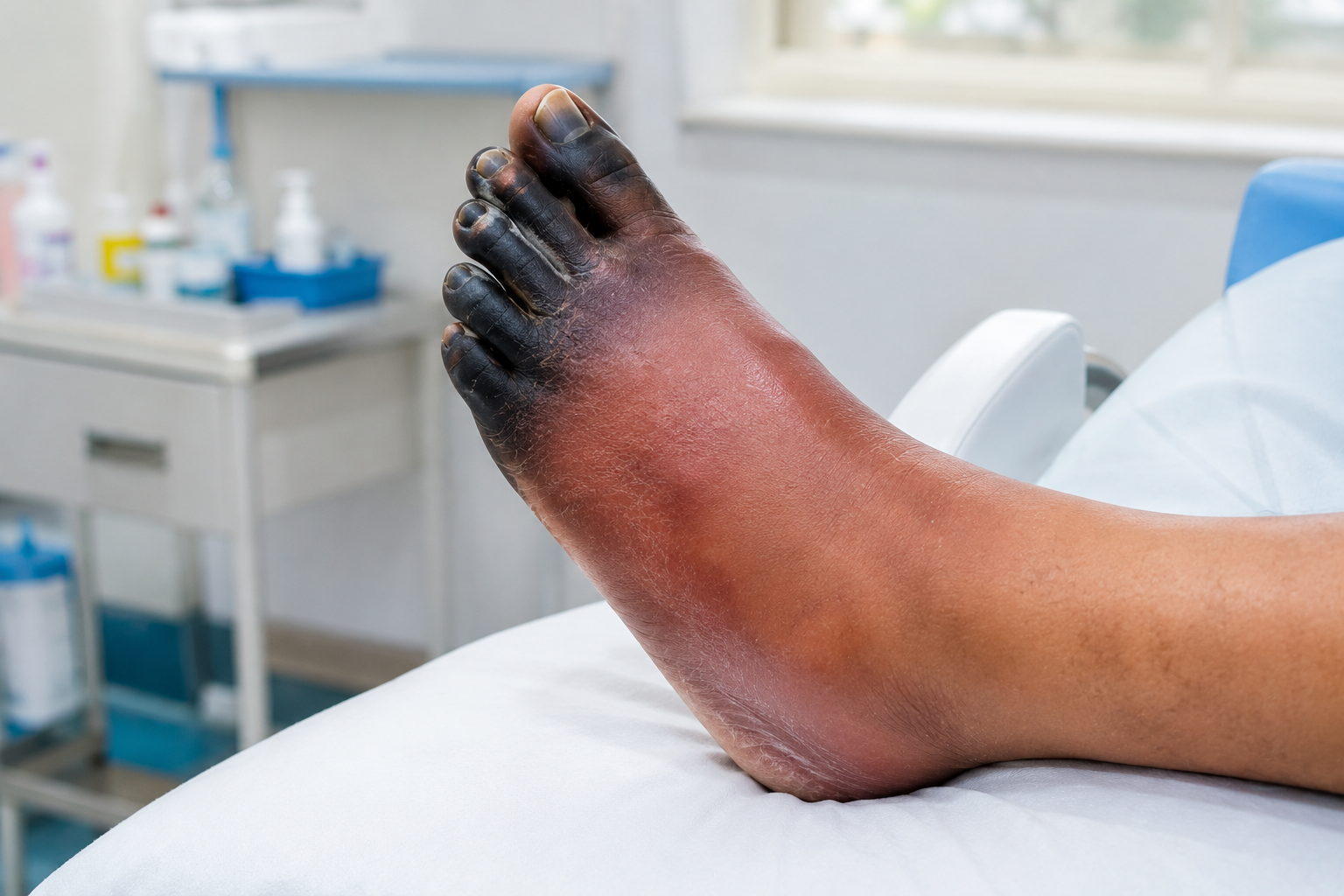
Diabetic gangrene is the death of body tissue in the foot or toes, caused by loss of blood supply, severe infection, or both, in a person with diabetes. The tissue turns dark red, purple, brown or black, becomes cold or numb, and eventually separates from healthy tissue.
It is the end stage of problems that usually start much smaller, a callus, a crack, a blister or an ulcer that was left too long. Gangrene sits among the most serious of the foot conditions we treat, and you can read more on our gangrene condition page.
Can diabetic gangrene be cured?
Diabetic gangrene cannot be cured in the sense of bringing dead tissue back to life, but it can be treated and stopped, and the limb can often be saved. The honest answer is that the dead part is removed, while the living tissue around it is rescued by restoring circulation and controlling infection.
So when people search for a diabetic gangrene cure in Jami, what they are really looking for is limb salvage, keeping a working foot rather than losing a leg. That is achievable in a large share of cases, provided treatment starts early and the blood supply can be improved.
Be careful with anyone who promises a complete cure with medicines, oils, herbal pastes or dressings alone. There is no medicine that regenerates dead tissue.
What causes diabetic gangrene?
Diabetic gangrene is caused by poor blood supply and infection acting together on a foot that has lost normal sensation. High blood sugar over years damages both the arteries and the nerves, so injuries go unnoticed and heal badly, and bacteria get a free run.
- Peripheral artery disease: narrowed leg arteries starve the foot of oxygen.
- Neuropathy: numbness means an injury or ulcer is not felt at all.
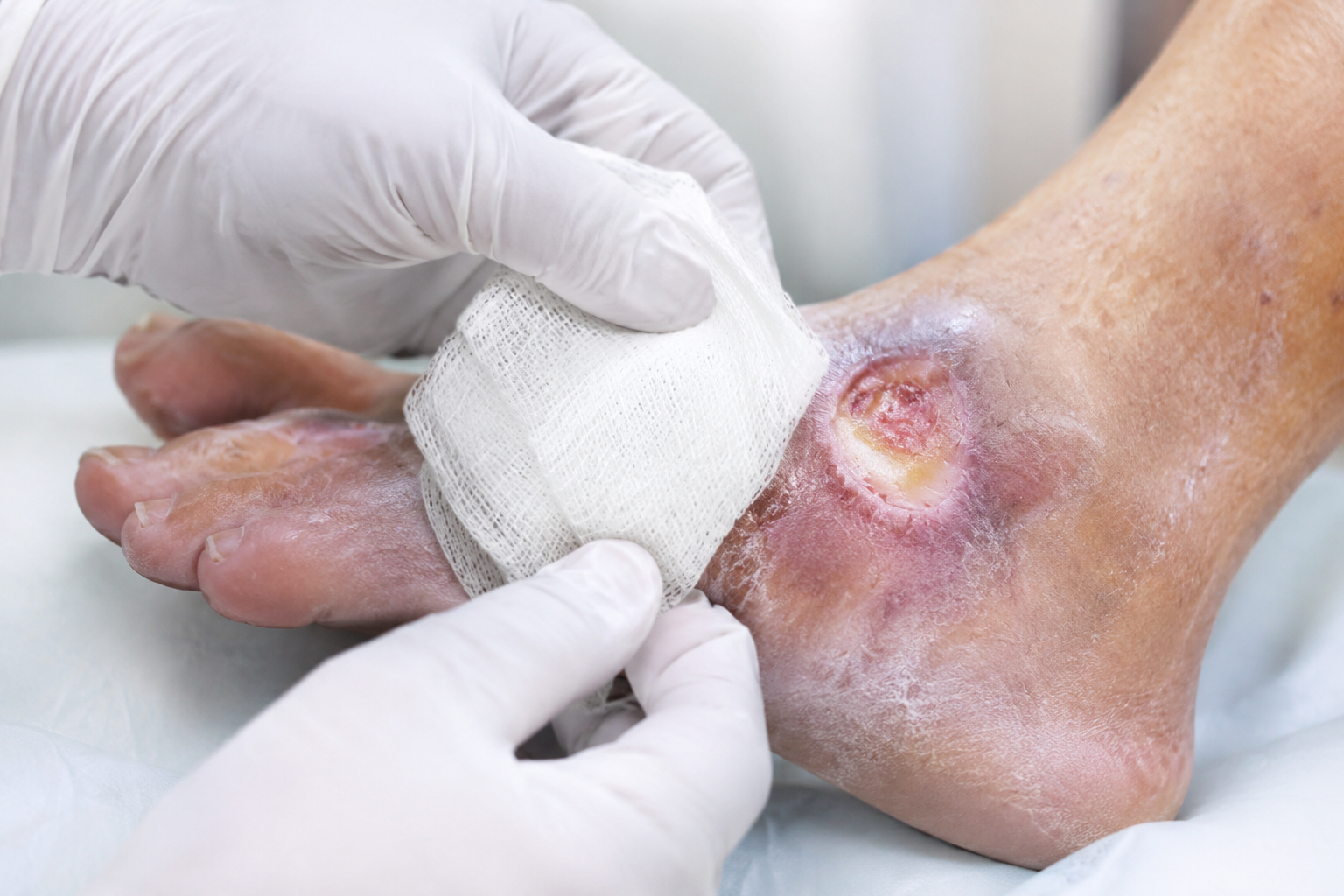
- Untreated foot ulcers that deepen and become infected.
- Severe infection that cuts off small vessels inside the tissue.
- Uncontrolled blood sugar, which weakens the body's defence against bacteria.
- Smoking, which further narrows the arteries.
- Tight footwear or home cutting of corns and nails causing unnoticed wounds.
What are the types of diabetic gangrene?
The main types of diabetic gangrene are dry gangrene, wet gangrene and gas gangrene. Dry gangrene is caused mainly by poor blood supply and spreads slowly, while wet and gas gangrene involve infection, spread fast, and need emergency treatment.
| Type | What you see | Urgency |
|---|---|---|
| Dry gangrene | Dry, shrunken, black toe or area with a clear line from healthy skin, little discharge | Urgent specialist review, usually days not hours |
| Wet gangrene | Swollen, moist, foul smelling tissue with pus, spreading redness, fever | Emergency, same day hospital care |
| Gas gangrene | Rapid swelling, crackling under the skin, severe illness | Life threatening emergency, immediate surgery |
The type matters because it changes the plan. Dry gangrene of a toe may be managed in a controlled way while circulation is improved. Wet gangrene will not wait.
What are the early warning signs of diabetic gangrene?
The early warning signs of diabetic gangrene include skin that turns dusky red, blue, brown or black, a cold or numb foot, pain in the leg at rest or at night, a wound that will not heal, and any foul smell or discharge from the foot.
- Colour change in a toe or part of the foot, especially darkening.
- Coldness of the foot compared with the other side.
- Rest pain or night pain in the foot or calf, relieved by hanging the leg down.
- An ulcer that is not healing after two weeks of care.
- Foul smell, pus or dark discharge.
- Swelling, spreading redness or fever, which suggest wet gangrene.
In our diabetic foot practice we frequently see patients whose first complaint was simply a black toe that did not hurt. Absence of pain is not reassurance, in a numb foot it is expected.
How is diabetic gangrene diagnosed?
Diabetic gangrene is diagnosed by clinical examination of the foot combined with tests of blood supply and infection. The specialist checks pulses, sensation and the extent of dead tissue, then uses Doppler studies or angiography to see how blocked the arteries are.
Blood tests assess sugar control, infection markers, kidney function and haemoglobin. X-ray or MRI may be used to check whether the infection has reached the bone. Wound cultures guide antibiotic choice. This assessment decides one key question, is there enough blood flow to heal a smaller surgery.
How is diabetic gangrene treated?
Diabetic gangrene is treated by removing the dead tissue, restoring blood supply, controlling infection and stabilising blood sugar, followed by reconstruction to keep the foot usable. Treatment is staged, and the aim throughout is to remove as little as possible.
- Assessment and stabilisation: blood sugar control, hydration, treatment of any sepsis.
- Infection control: intravenous antibiotics guided by wound culture.
- Debridement: surgical removal of dead and infected tissue, urgently in wet gangrene.
- Revascularisation: angioplasty or bypass to reopen blocked leg arteries, part of our vascular services.
- Advanced wound care: negative pressure therapy and modern dressings under non-surgical wound management.
- Offloading: pressure relief with casts or special footwear so the wound can heal.
- Reconstruction: skin grafts, flaps or toe level surgery through diabetic foot surgery to rebuild a weight bearing foot.
Restoring blood flow is often the step that changes everything. A wound that refuses to heal for months can start healing within weeks once the artery feeding it is reopened.
Can the foot be saved without amputation?
Yes, in many cases the foot can be saved without a major amputation, especially when treatment starts early and circulation can be restored. Where tissue loss is unavoidable, surgery is usually limited to a toe or a small part of the foot rather than the leg.
The factors that decide it are the extent of dead tissue, whether the arteries can be reopened, how far infection has spread, whether bone is involved, and overall health and sugar control. Delay is the factor patients can actually change.
Do home remedies or alternative cures work for diabetic gangrene?
No, home remedies and alternative cures do not work for diabetic gangrene, and relying on them is the most common reason a savable foot is lost. Herbal pastes, oils, poultices and unproven dressings cannot restore blood flow or remove dead tissue, and they can hide a spreading infection.
Good foot hygiene, blood sugar control and stopping smoking genuinely help, but they support medical treatment rather than replace it. If a gangrenous toe is being treated at home while it darkens further, the clock is running against the limb.
How can diabetic gangrene be prevented?
Diabetic gangrene is prevented by controlling blood sugar, checking the feet daily, treating small wounds early, and having circulation assessed if the feet are cold, numb or painful. Almost every case begins as a small problem that could have been treated.
- Inspect both feet daily, including between the toes and the soles.
- Never walk barefoot, indoors or outdoors.
- Get any ulcer or non-healing wound assessed within days, not months.
- Do not cut corns, calluses or nails yourself.
- Stop smoking, which directly worsens leg circulation.
- Attend regular preventive foot care checks, including pulse and sensation testing.
When should you see a specialist urgently?
See a specialist urgently if any part of the foot turns dark or black, if there is foul discharge, spreading redness, swelling or fever, or if you have rest pain or a wound that is not healing. Wet gangrene with fever needs same day emergency hospital care.
If you are unsure whether it can wait, assume it cannot. In gangrene, the tissue you save is decided in days.
Diabetic gangrene treatment and limb salvage for Jami
Elegance Diabetic Foot & Ulcer Clinic (EDFC) treats gangrene, non-healing ulcers and severe foot infections from its centre in Surat, and is expanding diabetic foot and limb salvage care into the Vizianagaram district, including Jami. If you are looking for a diabetic gangrene cure in Jami, the realistic goal we work towards is limb salvage, removing only what is dead and rebuilding a foot you can walk on.
You can send a clear photo of the foot to our team on WhatsApp for initial guidance and book a foot assessment. If there is fever, swelling or foul discharge, go to the nearest hospital first. Follow EDFC on Facebook, Instagram and YouTube for real limb salvage stories.
Save the foot, not just the wound
Gangrene does not have to mean losing a leg, but it does mean acting now rather than next month. If a toe or part of your foot is darkening, or a wound is not healing, book an assessment with Elegance Diabetic Foot & Ulcer Clinic or send a photo for guidance today.
Medical disclaimer: This article is for educational purposes only and is not a substitute for professional medical diagnosis or treatment. Gangrene with fever, swelling or foul discharge is a medical emergency. Please consult Dr. Ashutosh Shah or a qualified specialist about your condition. For authoritative guidance, see the NHS guide to gangrene and the IWGDF diabetic foot guidelines.
This article is general education, not a diagnosis. If you have a darkening toe or a non-healing diabetic foot wound, please have it assessed in person. Send a photo on WhatsApp or book a consultation.
This article is general education, not a diagnosis. If you have a diabetic foot wound, please have it assessed in person. Send a photo on WhatsApp or book a consultation.
About the Author

Dr. Ashutosh Shah, Plastic, Reconstructive & Diabetic Foot Surgeon, Elegance Diabetic Foot & Ulcer Clinic, Surat
Dr. Ashutosh Shah is a board certified plastic and reconstructive surgeon with over 22 years of experience and more than 10,000 limbs and feet saved. He founded Elegance Diabetic Foot & Ulcer Clinic, India's first chain of clinics dedicated to foot care, with centres in Surat and OPD partners across South Gujarat. He is known for a limb first approach, safe wound care and ethical, natural results.