Diabetic foot ulcer prevention starts at home with a simple daily routine: check both feet every day, wash and moisturise them, wear well-fitting shoes and socks, never walk barefoot, and keep blood sugar controlled. Family support and catching any wound early are what stop small problems from becoming serious ulcers.
Most diabetic foot ulcers are preventable, and prevention rarely begins in a hospital - it begins with what you and your family do at home every day. This guide walks through the exact home routine, the family's role, the warning signs to act on, and when to call a specialist.
What is a diabetic foot ulcer and why prevent it at home?
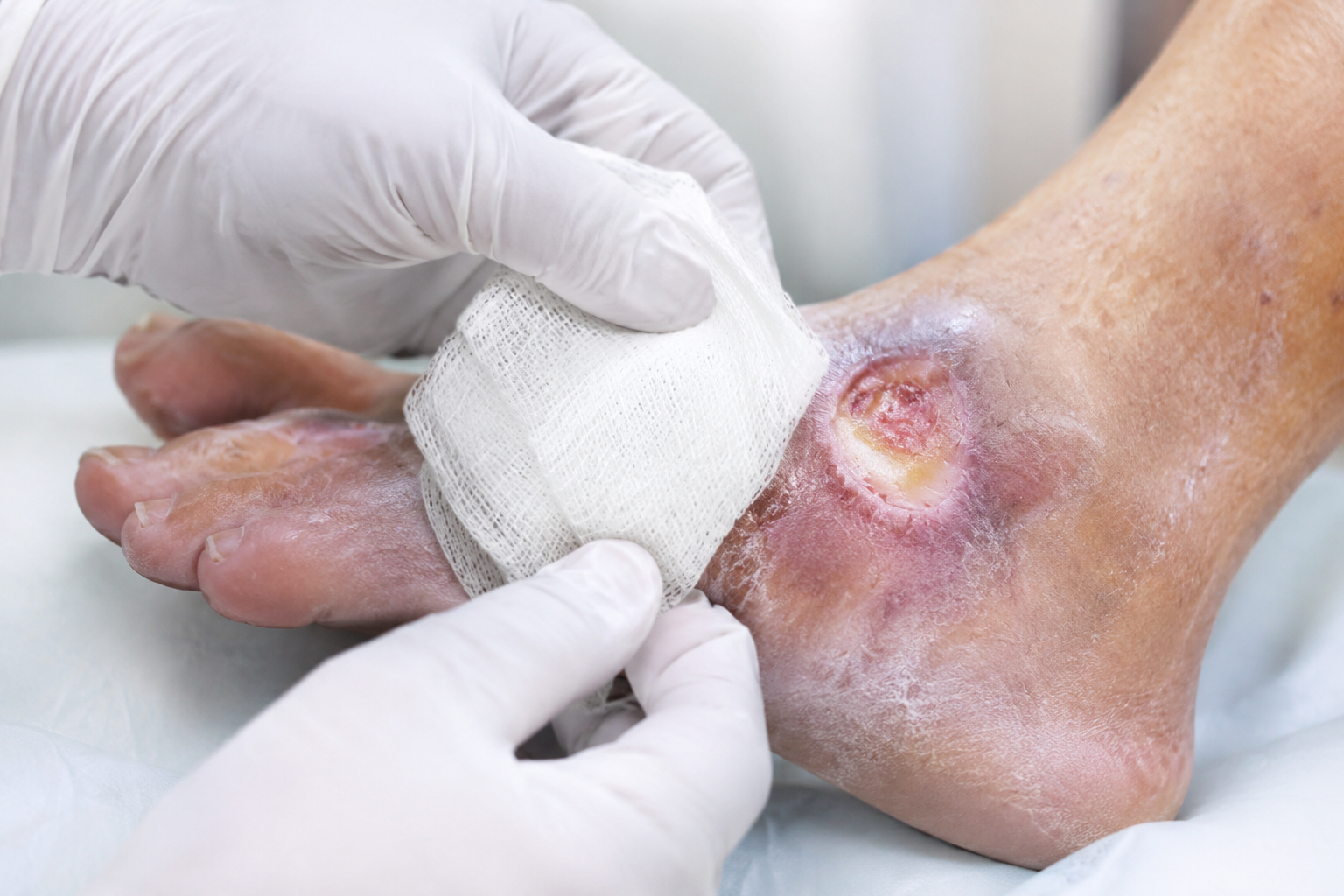
A diabetic foot ulcer is an open sore, usually on the sole or under the toes, that forms when high blood sugar damages the nerves and blood vessels in the feet. Preventing it at home matters because a numb foot cannot feel the small injury that starts it, so daily checking is the only way to catch it in time.
Diabetes causes two problems that make the feet vulnerable: nerve damage (neuropathy) that hides pain, and poor circulation that slows healing. Together they turn a tiny blister or cut into a wound that will not close - unless it is spotted early at home.
Why does diabetic foot ulcer prevention start at home?
Diabetic foot ulcer prevention starts at home because nearly every ulcer begins as a minor injury - a blister, cut, crack, or rub - that a numb foot never feels. The daily habits done at home are what find that injury while it is still harmless.
By the time an untreated wound is painful or smells, it is often already deep. Simple home care - looking, washing, moisturising, and protecting the feet - catches problems days or weeks earlier, which is exactly when they are easiest to heal and when the foot can be saved.
How do you check your feet every day?
Check your feet at the same time each day, in good light, looking and feeling for anything new. If you cannot see or reach your soles, use a mirror or ask a family member - never skip the check.
- Look at the whole foot - top, sole, heel, and especially between the toes.
- Check for cuts, blisters, redness, swelling, cracks, corns, calluses, colour changes, or discharge.
- Feel for warm or hard spots, and notice any area that has become more numb.
- Use a mirror or ask for help if bending or eyesight makes the soles hard to see.
- Act the same day on anything new or unusual - do not "wait and watch".
What is the daily diabetic foot care routine at home?
The daily home routine is short: inspect, wash, dry, moisturise, and protect. Done consistently, these five steps prevent most foot ulcers. The table below shows what to do - and what to avoid.
| Do this at home | Avoid this |
|---|---|
| Wash feet daily in lukewarm water; dry well, especially between the toes | Soaking feet for long periods, or using hot water |
| Moisturise the tops and soles to prevent cracks | Putting cream between the toes (traps moisture) |
| Test water temperature with your hand or elbow | Testing water with your feet, or using heating pads / hot water bottles |
| Wear well-fitting shoes and seamless socks at all times | Walking barefoot, even indoors |
| Check inside shoes for stones or rough seams before wearing | Slipping shoes on without looking inside |
| Have a professional trim nails, corns, and calluses | Cutting corns/calluses yourself or using acid removers |
Which footwear helps prevent diabetic foot ulcers?
The best footwear for preventing diabetic foot ulcers fits well, has a wide toe box, cushioned soles, and no hard inner seams. Good shoes and socks remove the pressure and friction that cause most ulcers on a numb foot.
Wear shoes with socks all day, indoors and out, and replace worn footwear. People with foot deformity, previous ulcers, or high-pressure areas often need therapeutic footwear, custom insoles, or offloading fitted by a specialist to spread pressure safely.
What role does family play in preventing diabetic foot ulcers?
Family plays a decisive role in diabetic foot care - it is not the patient's responsibility alone. An alert family member who helps check the feet, notices changes early, and encourages the daily routine can dramatically lower the risk of ulcers, infection, and amputation.
This matters most for patients who are elderly, have poor eyesight, are overweight, or cannot easily reach their feet, because they often cannot see their own soles. A family caregiver can inspect the feet each day, check footwear, keep an eye on blood sugar habits, and act fast by arranging a specialist visit the moment something looks wrong. That shared vigilance is often what saves a foot.
What are the early warning signs to act on at home?
Act quickly if you notice any change in a diabetic foot - early signs are easy to treat, ignored ones become ulcers. Contact a specialist the same day for any of the signs below.
- A cut, blister, crack, or sore that is new or not healing.
- Redness, warmth, or swelling in one area or the whole foot.
- Colour changes - a dark, blue, or black area of skin or a toe.
- Pus, fluid, or a bad smell from the foot.
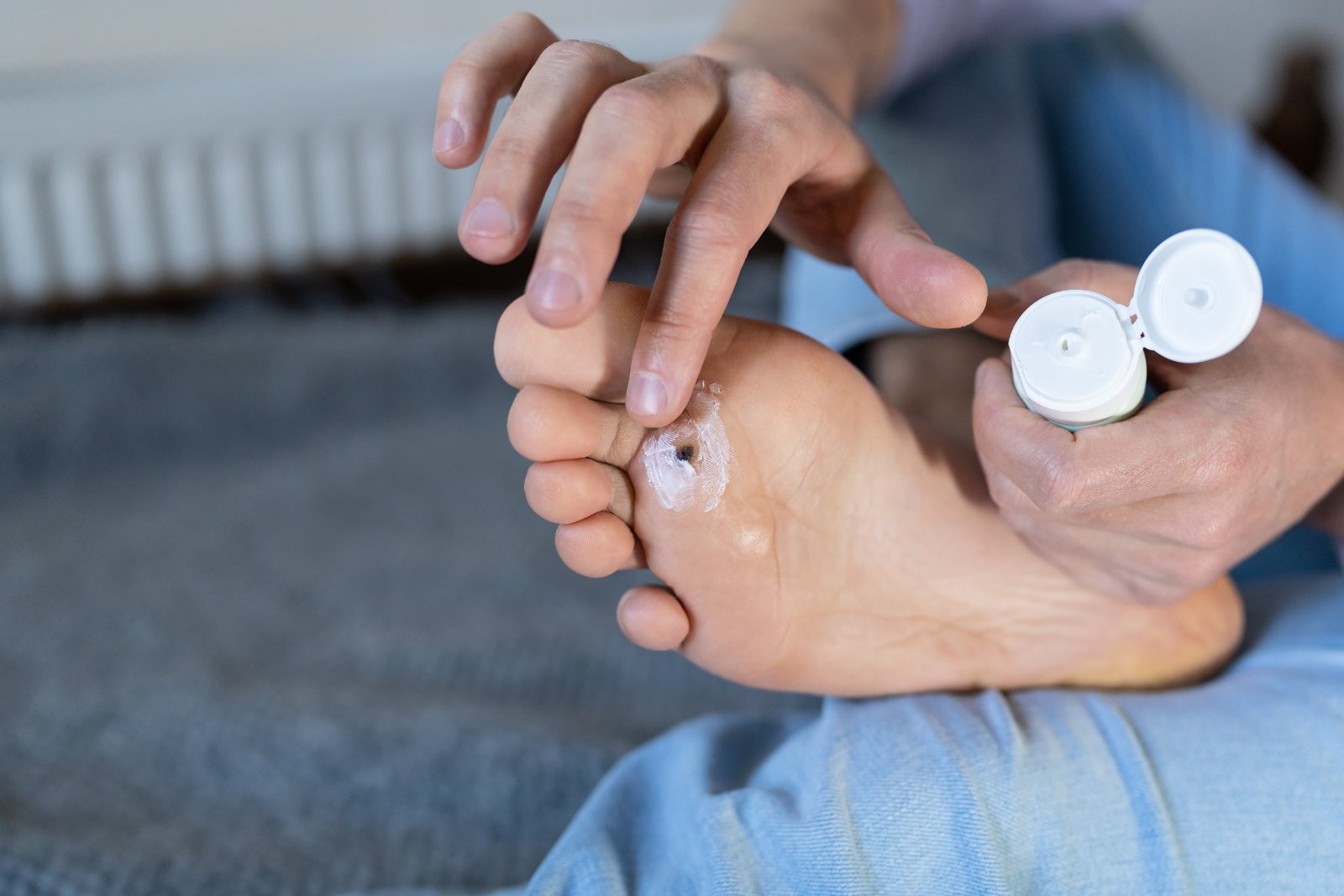
- A corn or callus that is thickening, or has a dark spot inside it.
- New or increasing numbness, tingling, or pain, especially at night.
What should you never do at home if you have diabetes?
Never walk barefoot, never use hot water bottles or heating pads on your feet, and never cut your own corns or calluses or use over-the-counter acid removers. On a numb foot, these common habits cause burns and wounds you cannot feel until they are serious.
Also avoid soaking your feet for long periods, using sharp tools on your skin, and ignoring a small wound in the hope it will settle. If you are unsure whether something is safe, treat it as a reason to ask a specialist rather than risk the foot.
How does blood sugar control prevent foot ulcers?
Keeping blood sugar within your target range is one of the most powerful ways to prevent foot ulcers, because it protects the nerves and blood vessels that keep feet healthy. Good control preserves sensation, maintains circulation, and helps any minor injury heal before it becomes an ulcer.
Alongside sugar control, not smoking, staying active, and attending regular foot screening and assessment keep the risk low. Prevention at home and specialist checks work together.
When should you stop home care and see a specialist?
See a diabetic foot specialist the same day if you find any open wound, blackened skin, spreading redness, pus, bad smell, or fever - these need professional care immediately, not home dressing. Home care prevents ulcers; it does not treat an established one.
Even without an obvious wound, book a check if you notice new numbness, a stubborn callus, or a foot shape that is changing. Early specialist review is the single biggest factor in preventing amputation.
Prevention support at Elegance Diabetic Foot & Ulcer Clinic
At Elegance Diabetic Foot & Ulcer Clinic in Surat, led by Dr. Ashutosh Shah, families are taught exactly how to protect a diabetic foot at home - daily checks, safe footwear, and the warning signs that need urgent care. Through preventive foot care and screening, the team helps high-risk patients and their caregivers stop ulcers before they start, and steps in quickly if a wound appears. Prevention at home and expert support together are what keep feet whole.
Protect your feet with expert guidance
If you or a family member has diabetes, a few minutes of daily foot care can prevent a serious ulcer. Book a preventive foot check with Elegance Diabetic Foot & Ulcer Clinic, or send a photo of any foot concern on WhatsApp for quick guidance on your next step.
This article is for general education only and is not a substitute for professional medical advice, diagnosis, or treatment. Please consult Dr. Ashutosh Shah or a qualified specialist about your individual condition.
quiz Frequently Asked Questions
This article is general education, not a diagnosis. If you have a diabetic foot wound, please have it assessed in person. Send a photo on WhatsApp or book a consultation.
About the Author

Dr. Ashutosh Shah, Plastic, Reconstructive & Diabetic Foot Surgeon, Elegance Diabetic Foot & Ulcer Clinic, Surat
Dr. Ashutosh Shah is a board certified plastic and reconstructive surgeon with over 22 years of experience and more than 10,000 limbs and feet saved. He founded Elegance Diabetic Foot & Ulcer Clinic, India's first chain of clinics dedicated to foot care, with centres in Surat and OPD partners across South Gujarat. He is known for a limb first approach, safe wound care and ethical, natural results.