Written by Dr. Ashutosh Shah, M.S., M.Ch. (Plastic and Reconstructive Surgery), Founder and Lead Surgeon, Elegance Diabetic Foot & Ulcer Clinic (EDFC). 22+ years of experience.
Medically reviewed by Dr. Ashutosh Shah.
Diabetic foot treatment combines wound care, pressure offloading, infection control and restoring blood flow to heal foot ulcers and prevent amputation. Mild cases are managed with dressings and pressure relief, while deep or infected wounds may need surgery or limb salvage. Early, specialist care gives the best chance of saving the foot.
A small foot wound in someone with diabetes is never just a small wound. This guide explains what diabetic foot treatment involves, from first signs to healing, so you know what to expect and when to act quickly.
What is diabetic foot treatment?
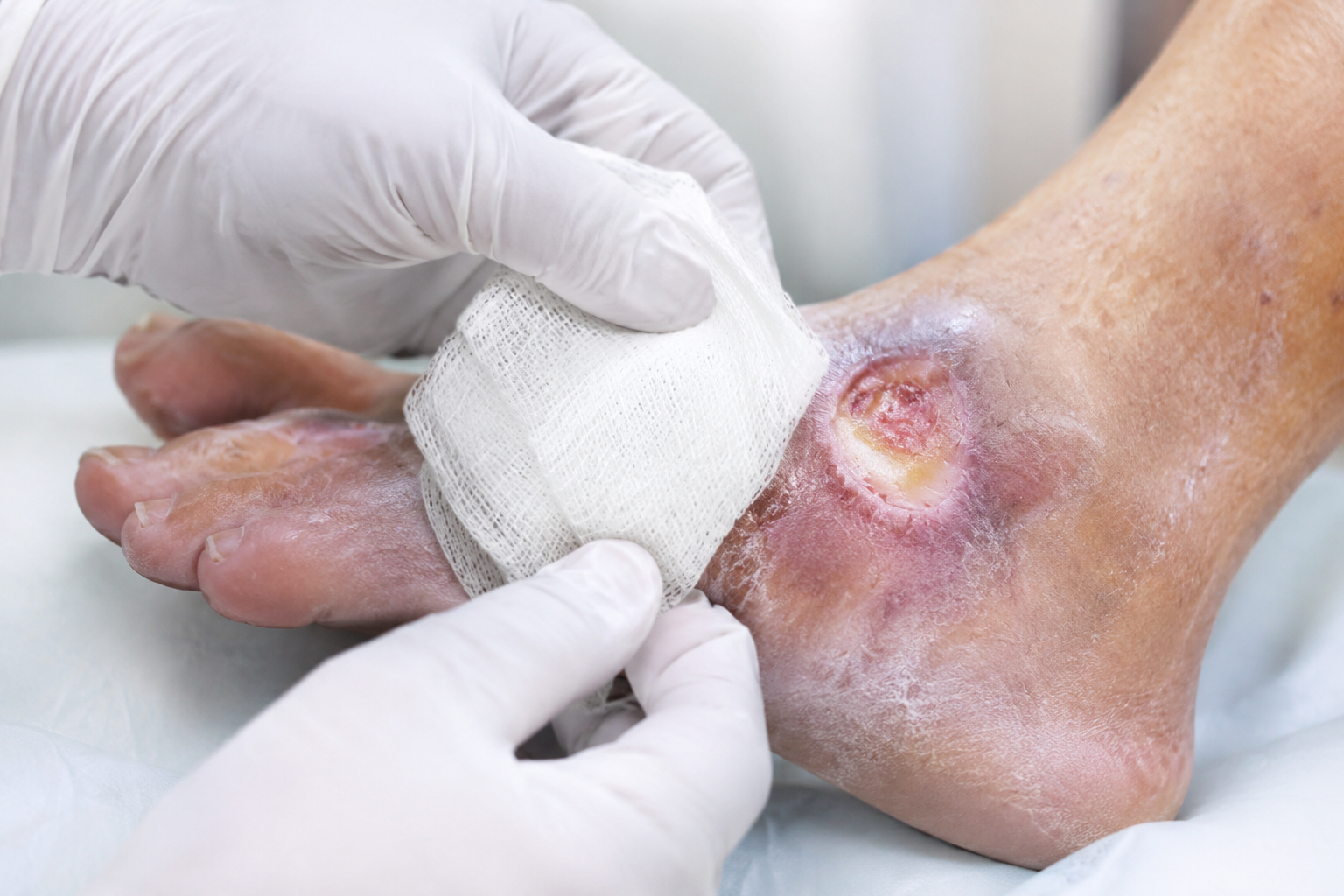
Diabetic foot treatment is the specialist care used to heal foot wounds, infections and circulation problems caused by diabetes, with the goal of saving the foot. It brings together wound dressing, offloading, infection control, blood flow correction and, when needed, surgery. A diabetic foot ulcer is an open sore, usually on the sole or toes, that will not heal on its own because nerve and blood vessel damage slow the body repair process.
What causes diabetic foot problems?
Diabetic foot problems are caused mainly by nerve damage (neuropathy) and poor circulation, both driven by long-term high blood sugar. Neuropathy removes the pain signal, so a blister, cut or pressure sore goes unnoticed. Poor blood flow then starves the wound of oxygen, so it fails to heal and can become infected. High sugar also weakens the immune response, letting infection spread fast.
What are the warning signs of a diabetic foot problem?
The main warning signs are a wound that will not heal, redness, swelling, warmth, or any discharge from the foot. Because pain is often absent, you have to look rather than wait to feel something. Check your feet daily and treat any of these as a reason to seek care:
- An open sore, blister or crack that is not healing
- Redness, swelling or warmth in one area
- Pus, fluid or a bad smell from a wound
- Dark, blue or black skin on a toe or the foot
- New numbness, tingling or burning
- A hot, swollen foot with no obvious wound
How is a diabetic foot problem diagnosed?
Diagnosis starts with a full foot examination that checks the wound, sensation and blood flow. A specialist tests nerves with a monofilament and tuning fork, checks foot pulses, and may use an ankle-brachial index or Doppler to measure circulation. Imaging such as X-ray or MRI is used when infection may have reached bone. You can read more on our diabetic foot assessment page.
How is diabetic foot treatment done?
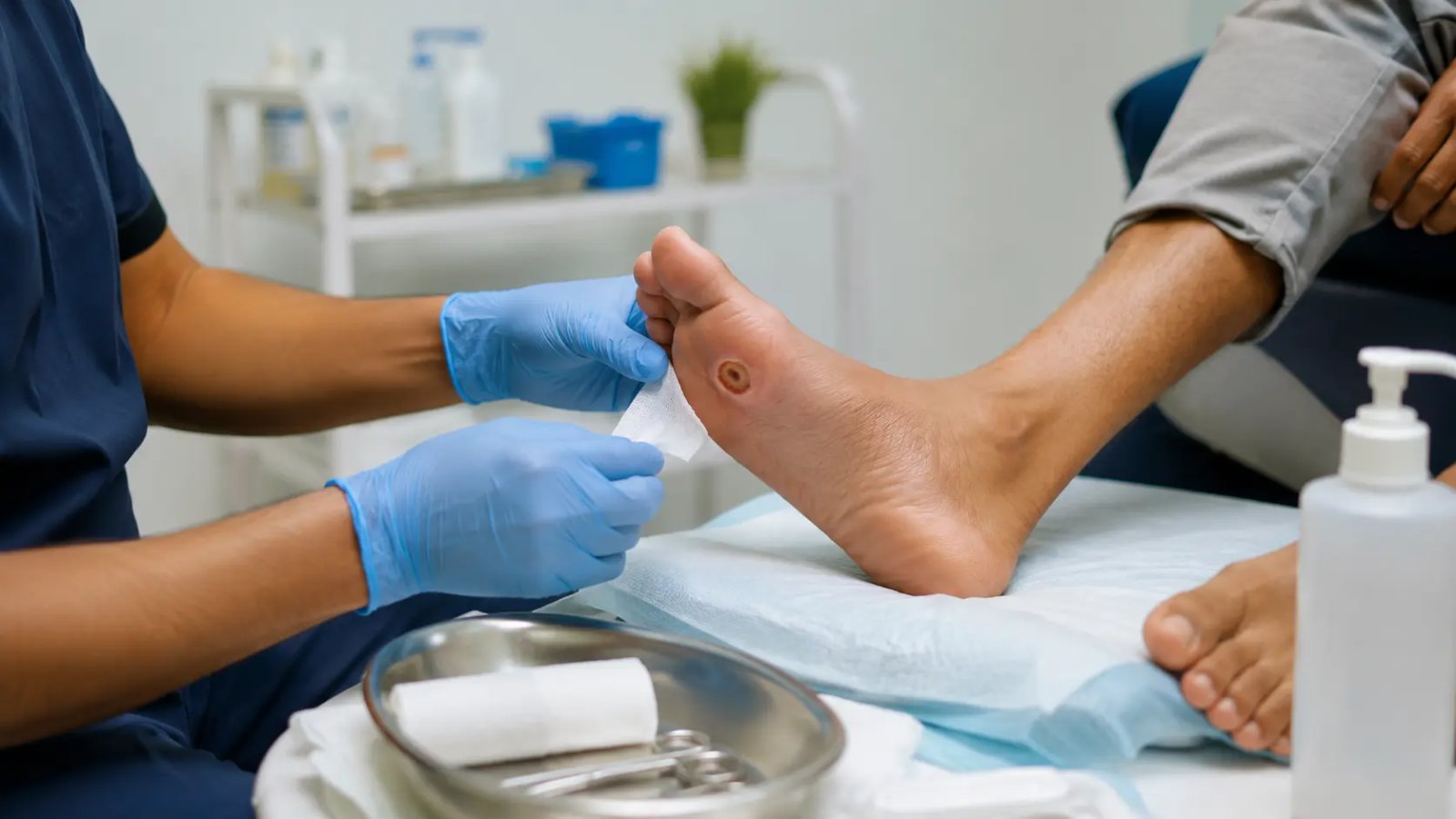
Diabetic foot treatment is done in stages: clean and dress the wound, take pressure off it, control any infection, restore blood flow, and use surgery only when the wound is deep, infected or not healing. Most foot ulcers are treated without major surgery when care starts early. The table below shows how non-surgical and surgical options compare.
| Approach | What it involves | Best for |
|---|---|---|
| Wound care and dressings | Cleaning, debridement of dead tissue, and advanced dressings that keep the wound moist and protected | Most early and surface ulcers |
| Offloading | Special footwear, casts or insoles that relieve pressure on the ulcer so it can heal | Pressure ulcers on the sole or toes |
| Infection control | Targeted antibiotics, drainage and removal of infected tissue | Infected or spreading wounds |
| Restoring blood flow | Angioplasty or bypass to open or reroute blocked leg arteries | Ulcers with poor circulation |
| Reconstructive and limb-salvage surgery | Skin grafts, flaps and microsurgery to close large wounds and rebuild the foot | Deep wounds exposing tendon or bone |
Non-surgical care is coordinated through our non-surgical wound management service, while deeper cases move to diabetic foot surgery and limb salvage. A spreading diabetic foot infection is treated as an emergency. International guidelines from the International Working Group on the Diabetic Foot (IWGDF) recommend offloading and prompt infection control as core parts of healing.
Can a diabetic foot ulcer be treated without amputation?
Yes. Most diabetic foot ulcers heal without amputation when treatment starts early and the cause is corrected. Amputation becomes a risk mainly when infection, dead tissue or blocked circulation is left untreated. Restoring blood flow and clearing infection in time are the two changes that most often save a foot. Many people referred for amputation elsewhere still keep the limb with dedicated limb-salvage care.
How can diabetic foot problems be prevented?
Prevention comes down to daily foot checks, good blood sugar control and protecting the feet from pressure and injury. Simple habits prevent most serious problems:
- Check both feet every day, including between the toes and the soles
- Keep blood sugar within your target range
- Wash and dry feet daily, and moisturise dry skin, but not between the toes
- Never walk barefoot, and always check inside shoes before wearing
- Wear well-fitting or custom diabetic footwear
- Have calluses, corns and nails treated by a professional, not cut at home
- Get an annual foot screening, or sooner if you notice any change
When should you see a doctor for a diabetic foot?
See a doctor the same day if you notice a new foot wound, spreading redness, swelling, pus, a foul smell or any black tissue. In diabetes these signs can worsen within hours, especially when infection is deep. A hot, swollen foot without a wound also needs urgent review, as it can signal Charcot foot or infection. When in doubt, treat a diabetic foot change as urgent rather than waiting.
Diabetic foot treatment at Elegance Diabetic Foot & Ulcer Clinic
At our clinics in Surat, Gujarat and Vizianagaram, Andhra Pradesh, we commonly see wounds that were dismissed as minor until they became serious, and in many of these cases the foot is still saved. Every case is led personally by Dr. Ashutosh Shah under a limb-first approach, where amputation is only ever considered after every limb-saving option has been explored. Care ranges from advanced dressings and offloading to microvascular reconstruction, all under one roof.
Book a diabetic foot assessment
If you have a foot wound, numbness or a change you are unsure about, do not wait for pain. Book a diabetic foot assessment with Dr. Ashutosh Shah and get a clear treatment plan for saving your foot.
This article is for education only and is not a substitute for an in-person diagnosis. Please consult Dr. Ashutosh Shah or a qualified specialist for advice specific to your condition. Reference: American Diabetes Association.
quiz Frequently Asked Questions
This article is general education, not a diagnosis. If you have a diabetic foot wound, please have it assessed in person. Send a photo on WhatsApp or book a consultation.
About the Author

Dr. Ashutosh Shah, Plastic, Reconstructive & Diabetic Foot Surgeon, Elegance Diabetic Foot & Ulcer Clinic, Surat
Dr. Ashutosh Shah is a board certified plastic and reconstructive surgeon with over 22 years of experience and more than 10,000 limbs and feet saved. He founded Elegance Diabetic Foot & Ulcer Clinic, India's first chain of clinics dedicated to foot care, with centres in Surat and OPD partners across South Gujarat. He is known for a limb first approach, safe wound care and ethical, natural results.