Written by Dr. Ashutosh Shah, Diabetic Foot and Ulcer Specialist, Elegance Diabetic Foot & Ulcer Clinic (EDFC), Jamnagar.
Medically reviewed by Dr. Ashutosh Shah
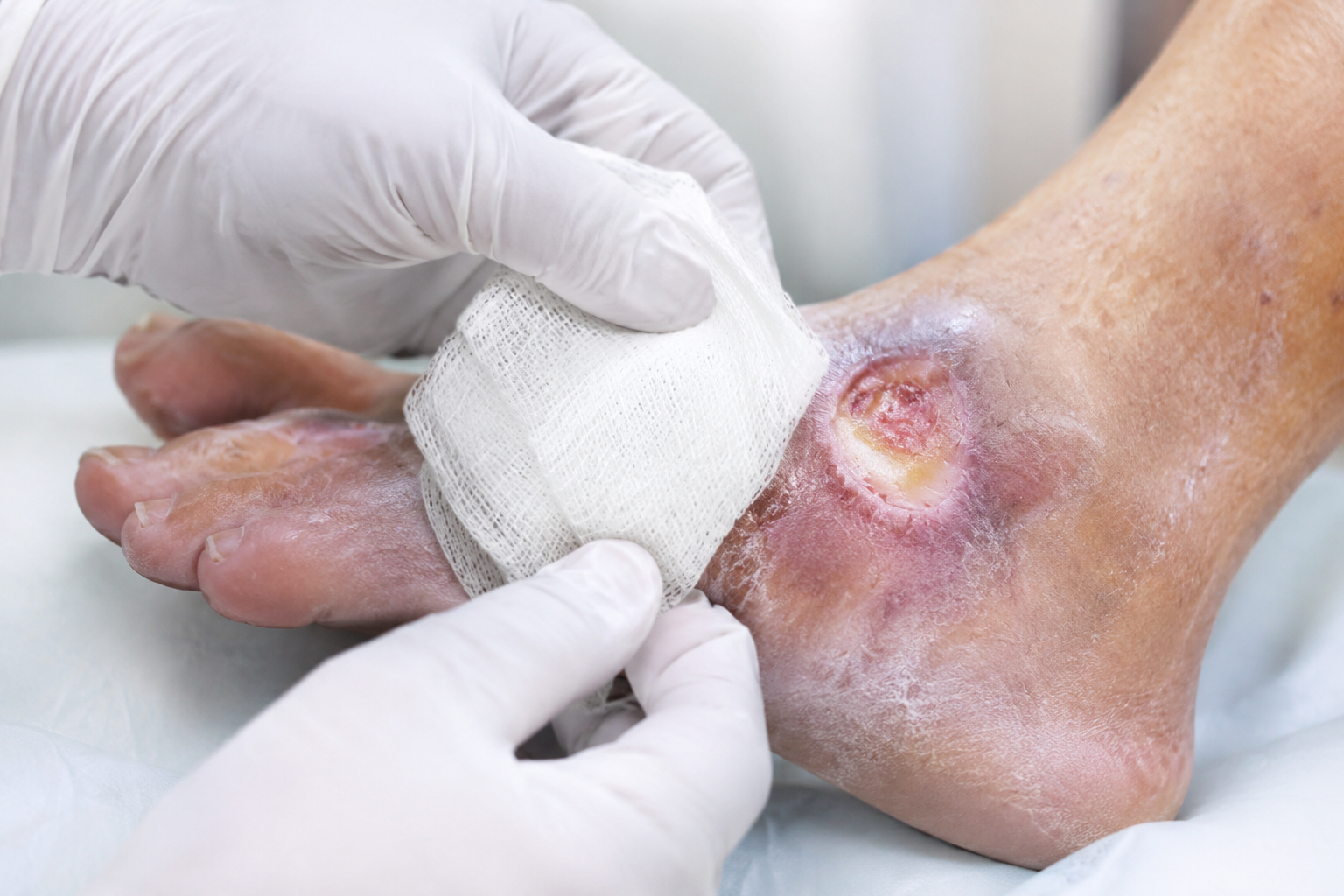
If you notice even a small cut on your foot and you have diabetes, treat it seriously. Diabetes can reduce sensation, so injuries go unnoticed, and it can slow healing, which raises the risk of infection. Good diabetic foot care in Jamnagar means cleaning the cut, protecting it, watching it daily, and seeing a doctor early.
A tiny cut may look harmless, but on a diabetic foot it can turn into a serious wound if ignored. This guide explains exactly what to do, which warning signs matter, and when to seek urgent care.
Why Does a Small Cut Matter So Much on a Diabetic Foot?
A small cut matters because diabetes changes how your feet feel and heal. High blood sugar can damage nerves, so you may not feel a cut, and it can reduce blood flow, so wounds heal slowly. This combination lets a minor injury become infected before you notice it. Careful diabetic foot care in Jamnagar helps you catch these problems early, when they are still easy to treat.
What Should You Do if You Notice a Small Cut on Your Diabetic Foot?
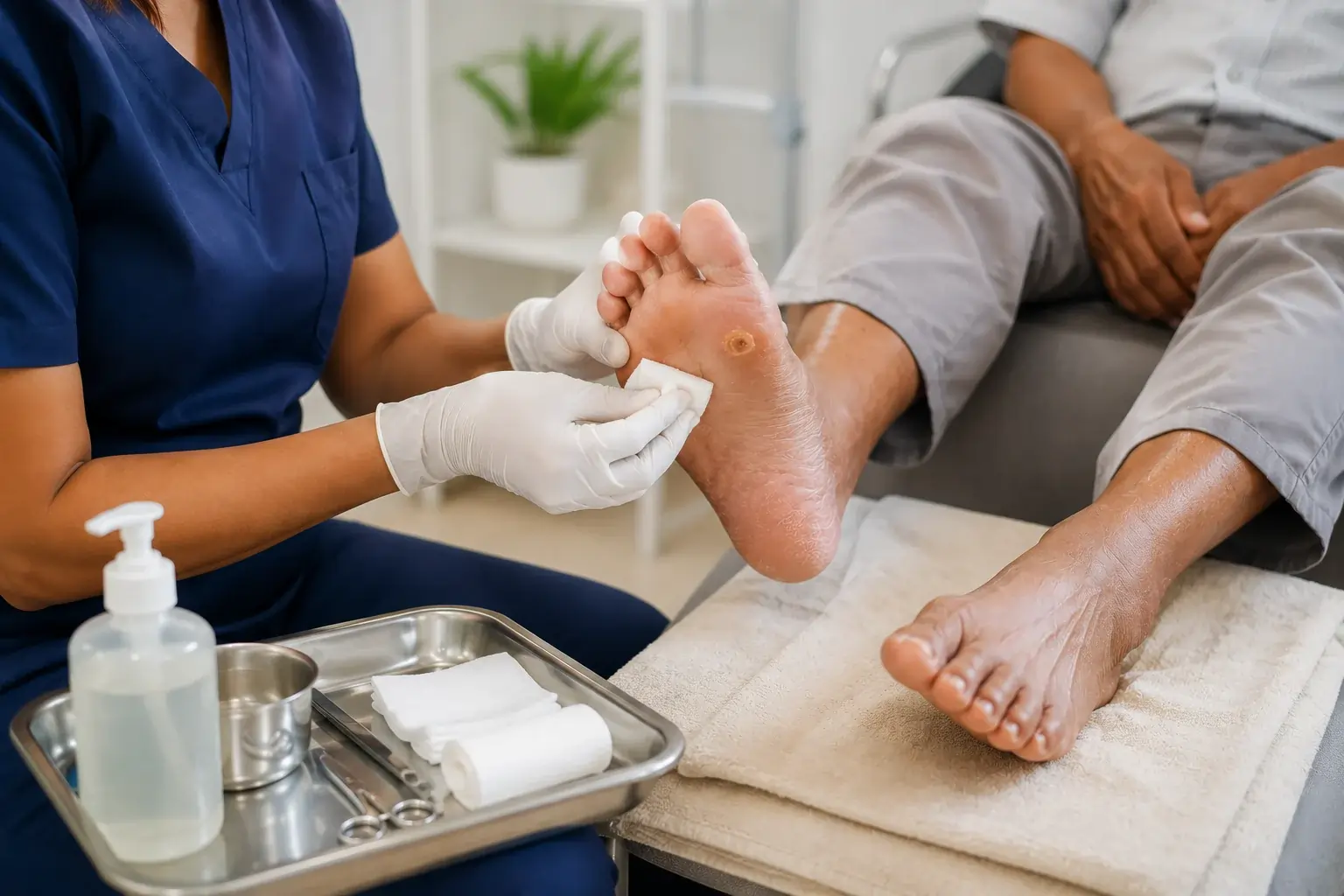
Clean the cut, protect it with a sterile dressing, keep pressure off it, and watch it closely every day. Acting on the same day the cut appears gives it the best chance to heal without infection.
Here is what you should do, step by step:
- Wash the cut gently with clean running water and mild soap. Avoid harsh chemicals such as hydrogen peroxide or iodine unless a healthcare professional specifically recommends them, as they can slow healing.
- Pat the area dry with a clean towel.
- Apply a thin layer of antibiotic ointment if your healthcare provider has recommended one.
- Cover the cut with a sterile, non-stick bandage and change the dressing daily or whenever it becomes wet or dirty.
- Keep pressure off the area as much as possible to promote healing.
- Check the wound every day for signs of infection.
- Monitor your blood sugar closely, as good glucose control helps wounds heal faster.
What Are the Signs of Infection to Watch For?
Watch for redness, swelling, warmth, pus, a bad odor, or worsening pain around the cut. Any one of these can be an early sign of infection that needs medical attention.
Check the wound daily for:
- Increasing redness
- Swelling
- Warmth
- Pus or drainage
- Bad odor
- Worsening pain, if you still have feeling in the area
When Should You Contact a Doctor, and When Is It an Emergency?
Contact a doctor promptly if the cut is not improving or shows any sign of infection. Seek urgent care if the wound turns black, spreads quickly, or drains heavily. The table below shows the difference at a glance.
| Contact a healthcare provider promptly if | Seek urgent medical care if |
|---|---|
| The cut is deep or the bleeding does not stop. | The wound becomes black or discolored. |
| You notice any signs of infection. | There is rapidly spreading redness or swelling. |
| The wound is not improving within 24 to 48 hours. | You have severe drainage or a foul smell. |
| You have poor circulation, numbness, or a history of foot ulcers. | You have other signs of a serious infection. |
| You develop fever or spreading redness. |
If you are unsure how serious a wound is, it is always safer to have it checked. Our team offers diabetic foot ulcer treatment and same day guidance for wounds that are not healing.
How Can You Prevent Cuts and Foot Problems?
You can prevent most foot problems with daily checks and sensible footwear. Small habits protect your feet from cuts that you might not feel.
Simple prevention tips include:
- Inspect your feet every day, including between the toes.
- Wear properly fitting shoes and clean, dry socks.
- Never walk barefoot, even indoors.
- Keep your skin moisturized, but avoid putting lotion between your toes.
The American Diabetes Association also recommends daily foot checks and regular professional foot exams for people with diabetes.
Diabetic Foot Care in Jamnagar at Elegance Diabetic Foot & Ulcer Clinic (EDFC)
At Elegance Diabetic Foot & Ulcer Clinic (EDFC), we focus fully on diabetic foot and wound care. In our clinic in Jamnagar we commonly see wounds that began as a small cut or blister, which is why we encourage patients to come in early rather than wait. For trusted diabetic foot care in Jamnagar, our team led by Dr. Ashutosh Shah offers wound assessment, dressing, infection control, and prevention advice under one roof. You can learn more about Dr. Ashutosh Shah, view our full diabetic foot treatment services, or read our step by step guide to diabetic foot treatment in Jamnagar, Gujarat.
A small cut on a diabetic foot should never be ignored. Clean it, protect it, monitor it closely, and contact your healthcare provider early if it does not improve or shows any sign of infection. Early treatment can help prevent more serious complications. To have a foot wound checked, book a consultation with our team today.
Disclaimer: This article is for educational purposes only and is not a substitute for professional medical diagnosis or treatment. Please consult Dr. Ashutosh Shah or a qualified specialist for advice about your condition.
quiz Frequently Asked Questions
This article is general education, not a diagnosis. If you have a diabetic foot wound, please have it assessed in person. Send a photo on WhatsApp or book a consultation.
About the Author

Dr. Ashutosh Shah, Plastic, Reconstructive & Diabetic Foot Surgeon, Elegance Diabetic Foot & Ulcer Clinic, Surat
Dr. Ashutosh Shah is a board certified plastic and reconstructive surgeon with over 22 years of experience and more than 10,000 limbs and feet saved. He founded Elegance Diabetic Foot & Ulcer Clinic, India's first chain of clinics dedicated to foot care, with centres in Surat and OPD partners across South Gujarat. He is known for a limb first approach, safe wound care and ethical, natural results.