
Written by Dr. Ashutosh Shah, MBBS, MS, MCh (Plastic & Microvascular Surgery), Diabetic Foot Specialist, Elegance Diabetic Foot & Ulcer Clinic (EDFC). Reg. No. [MCI/GMC Reg. No.]. 22+ years of experience. Read Dr. Shah's full profile.
Medically reviewed by Dr. Ashutosh Shah
Diabetic foot blisters in Vizianagaram should never be popped or ignored, because in diabetes even a small blister can turn into an infected ulcer. Keep the area clean and protected, avoid pressure, and have a diabetic foot specialist review any blister that is large, painful, discoloured, or slow to heal.
A blister may look minor, but for a person with diabetes it is an early warning that the foot is under stress. This guide explains what causes diabetic foot blisters, how to care for one safely at home, and the exact signs that mean you need specialist help in Vizianagaram.
What are diabetic foot blisters?
Diabetic foot blisters are fluid-filled pockets of skin that form on the feet of people with diabetes, often from friction, pressure, or nerve damage. In some cases they appear suddenly with no clear injury, a condition doctors call bullosis diabeticorum (a diabetic blister).
What makes them different from an ordinary blister is the healing environment. High blood sugar slows repair and dulls pain, so a diabetic foot blister can grow or break open without you noticing. You can see the full range of foot conditions we manage on our diabetic foot services page.
What causes diabetic foot blisters?
Diabetic foot blisters are caused mainly by friction and pressure on skin that has lost its normal protection because of nerve and blood-vessel damage. Tight shoes, new footwear, walking barefoot, heat, and moisture are the most common triggers.
Two underlying problems make the skin vulnerable. Neuropathy (nerve damage) means you cannot feel a rubbing shoe, and poor circulation means the skin is thinner and slower to heal. According to the IWGDF diabetic-foot guidelines, protecting at-risk feet from pressure is central to preventing wounds.
Are diabetic foot blisters dangerous?
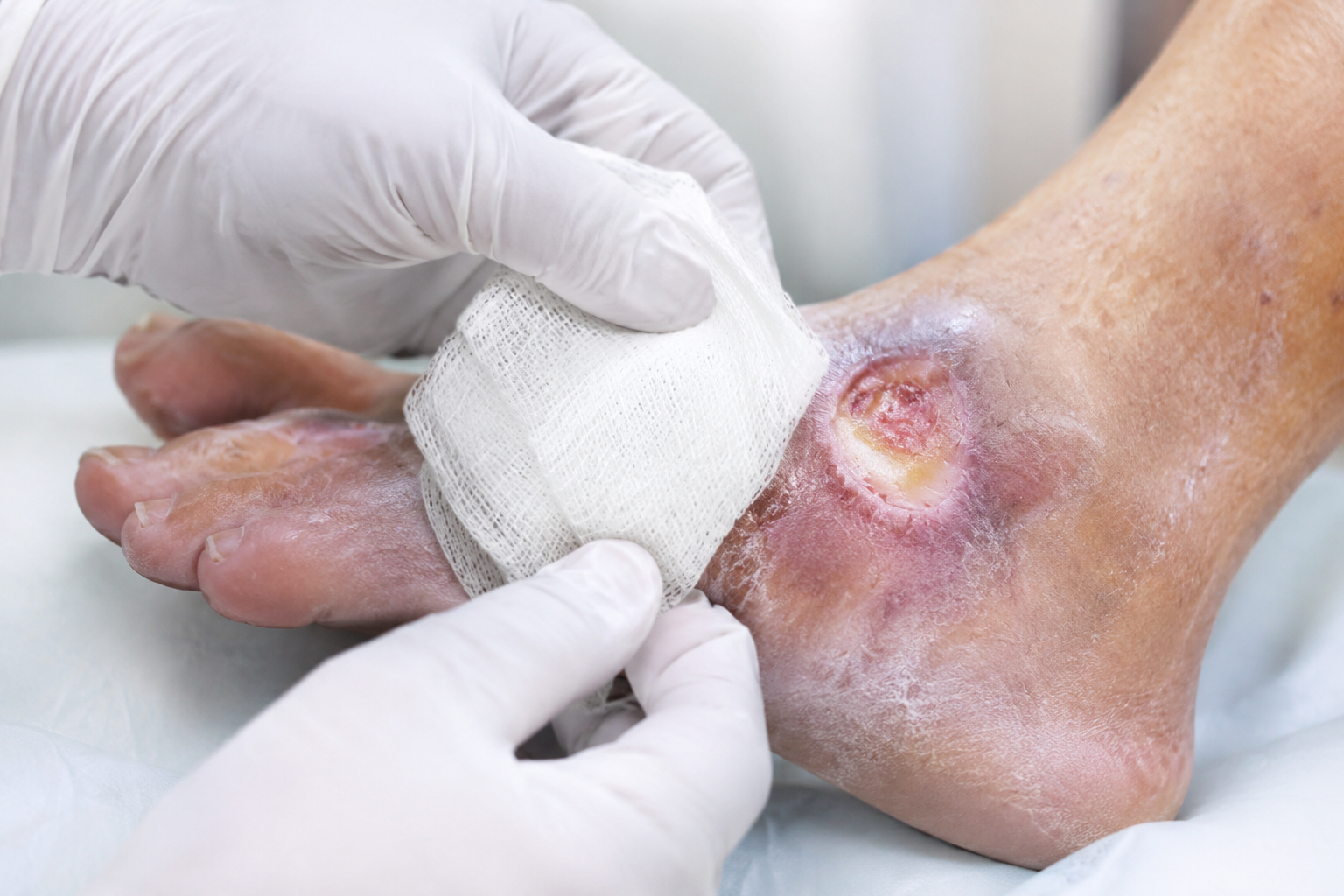
Yes, they can be. A diabetic foot blister is dangerous because it can break open and become an ulcer, which is an open wound that may get infected and reach deeper tissue or bone. What starts as a painless blister can end as a serious infection if it is left alone.
This is exactly why blisters are triaged carefully rather than dismissed. Early review through our assessment and diagnostics service checks whether the skin, sensation, and blood flow around the blister are safe.
What are the warning signs a blister has become serious?
Treat any of the signs below as urgent and see a specialist quickly. Catching a blister before it becomes an infected ulcer is the single biggest factor in avoiding surgery.
- Redness, warmth, or swelling spreading around the blister.
- Pus, cloudy fluid, or a bad smell from the site.
- The blister has burst and left an open, raw wound.
- Increasing pain, or new numbness in the area.
- Fever or feeling unwell, which can signal spreading infection.
- Dark, blue, or black skin on or near the blister.
In our clinic, we commonly see patients who assumed a painless blister would heal on its own, only to return weeks later with an infected ulcer. With diabetes, painless does not mean harmless.
How should you care for a diabetic foot blister at home?
Safe home care means protecting the blister without breaking it, keeping it clean, and taking pressure off the area. Never pop, drain, or peel a diabetic foot blister yourself, because that opens a direct route for infection. The simple do and do-not list below keeps you on the safe side.
| Do | Do not |
|---|---|
| Wash gently with clean water and cover with a sterile dressing | Pop, drain, or cut the blister open |
| Keep weight and pressure off the foot | Wear the shoe that caused the rubbing |
| Check the blister and surrounding skin daily | Apply heat, harsh antiseptics, or home remedies |
| Keep blood sugar well controlled | Walk barefoot or ignore it because it is painless |
| Contact a specialist if it changes or does not improve | Wait days hoping it will settle on its own |
Correct dressings and offloading are also part of clinic care. Our footwear and offloading service helps take pressure off the exact spot where blisters keep forming.
How are diabetic foot blisters treated?
Most diabetic foot blisters are treated without surgery using protective dressings, offloading, and infection control, and only advanced or infected wounds need a procedure. Treatment depends on whether the blister is intact, has burst, or has already become an ulcer.
Intact blisters are usually protected and monitored. Burst or infected blisters are cleaned and dressed through our non-surgical wound management service, and if dead tissue or deep infection develops, diabetic foot surgery by a microvascular specialist protects the limb. Where poor blood flow is slowing healing, our vascular services restore circulation so the wound can close.
How can you prevent diabetic foot blisters?
Prevention comes down to protecting your feet from friction and checking them every single day. Small, consistent habits stop most blisters before they start:
- Inspect both feet daily, including the soles and between the toes, using a mirror if needed.
- Wear well-fitted, broken-in shoes and soft socks; avoid new shoes for long walks.
- Never walk barefoot, indoors or outdoors.
- Keep feet dry and cool, as heat and moisture raise blister risk.
- Do not self-treat calluses or corns, which are common blister sites.
- Keep blood sugar controlled, because good glucose control protects skin and nerves.
The American Diabetes Association's foot-care guidance supports these same daily habits for anyone living with diabetes.
When should a Vizianagaram patient see a specialist?
See a diabetic foot specialist quickly if a blister has burst, looks infected, is spreading redness, or is not improving within a couple of days. For diabetic foot blisters in Vizianagaram, do not wait for pain, because nerve damage can hide a serious problem.
The fastest first step is to send clear photos of the blister over WhatsApp for same-day triage, then visit the nearest Elegance OPD center or our upcoming Vizianagaram center for hands-on care. Early review keeps a blister from becoming an ulcer.
Treatment at Elegance Diabetic Foot & Ulcer Clinic (EDFC)
At Elegance Diabetic Foot & Ulcer Clinic, care is led by Dr. Ashutosh Shah, a Plastic & Microvascular Surgeon and diabetic foot specialist with 22+ years of experience. Because one surgeon oversees wound care, circulation, and reconstruction, Vizianagaram patients get a single, coordinated plan for a blister rather than being passed between clinics.
Diabetic foot wounds are triaged first, and photos over WhatsApp get the fastest response. Learn more about our clinic and approach, or reach us any time through our contact page.
Get Your Diabetic Foot Blister Checked
A blister is your foot's early warning. For a safe, specialist assessment and clear guidance on diabetic foot blisters in Vizianagaram, book a consultation with Elegance Diabetic Foot & Ulcer Clinic today.
Medical disclaimer: This article is for education only and is not a substitute for professional diagnosis or treatment. Please consult Dr. Ashutosh Shah or a qualified diabetic foot specialist about your individual condition.
quiz Frequently Asked Questions
This article is general education, not a diagnosis. If you have a diabetic foot wound, please have it assessed in person. Send a photo on WhatsApp or book a consultation.
About the Author

Dr. Ashutosh Shah, Plastic, Reconstructive & Diabetic Foot Surgeon, Elegance Diabetic Foot & Ulcer Clinic, Surat
Dr. Ashutosh Shah is a board certified plastic and reconstructive surgeon with over 22 years of experience and more than 10,000 limbs and feet saved. He founded Elegance Diabetic Foot & Ulcer Clinic, India's first chain of clinics dedicated to foot care, with centres in Surat and OPD partners across South Gujarat. He is known for a limb first approach, safe wound care and ethical, natural results.