Patients often search for Charcot Foot the most dangerous complication, and the answer is simple. Charcot foot is a sudden collapse of bones and joints in a diabetic foot that has lost sensation. Moreover, it can destroy the arch within weeks, so early diagnosis protects the limb from amputation.
Key Takeaways
- Charcot foot is bone and joint destruction inside a diabetic foot that already has nerve damage.
- The first sign is usually a warm, red, swollen foot with no wound and almost no pain.
- Early Charcot foot is often mistaken for infection, gout or a simple sprain.
- Complete offloading in a total contact cast is the single most important early treatment.
- Untreated Charcot foot leads to a rocker bottom deformity, then ulcers, then amputation.
- Most feet can still be saved when treatment begins within the first few weeks.
Table of Contents
- What is Charcot foot?
- Why does Charcot foot develop in diabetes?
- What are the early warning signs?
- How is Charcot foot diagnosed?
- How is Charcot foot treated?
- What does treatment cost in India?
- Can Charcot foot be prevented?
- When should you see a doctor?
- Charcot foot care at EDFC
What is Charcot foot?
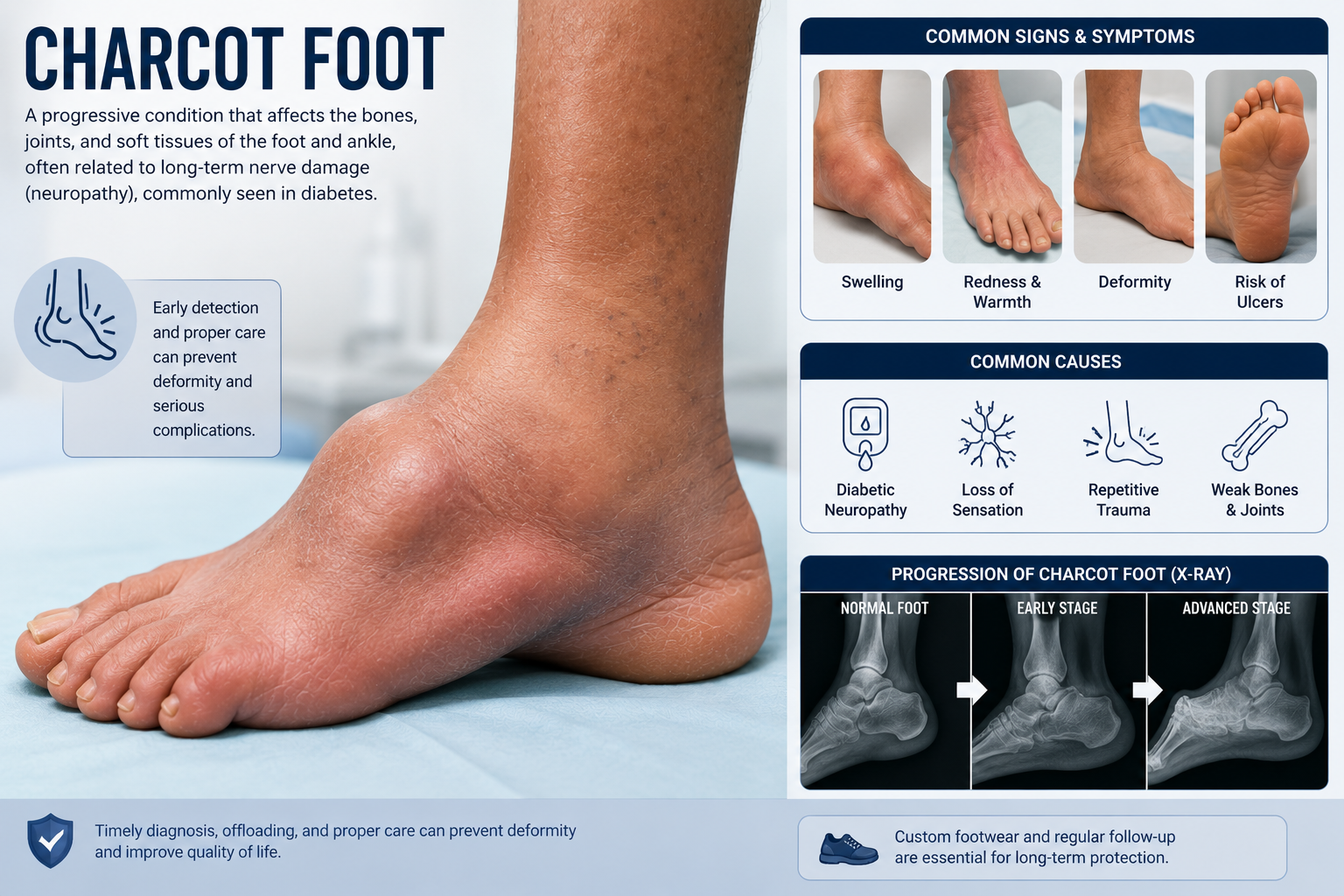
Charcot foot is a progressive condition in which the bones of a diabetic foot weaken, fracture and dislocate without the patient feeling pain. Because nerve damage removes the warning signal, people keep walking on broken bones. As a result, the arch collapses and the foot changes shape permanently.
Charcot foot: a destructive breakdown of the bones and joints of the foot in people with nerve damage, usually from long standing diabetes.
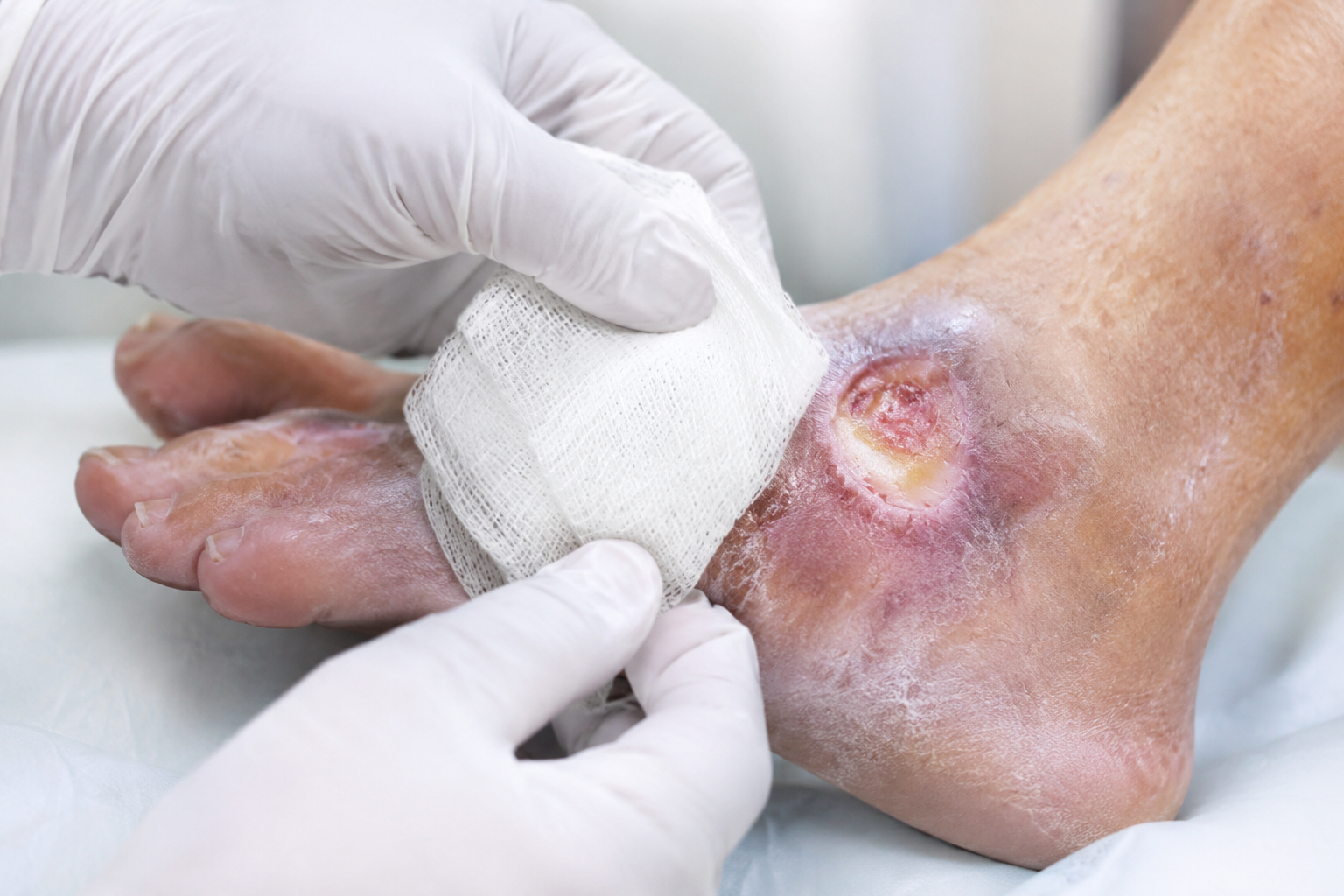
Once the arch drops, the sole develops a bulge that doctors call a rocker bottom foot. Consequently, body weight lands on a small patch of skin that was never designed to carry it. Pressure ulcers follow quickly, and those ulcers open a direct route to the bone. You can read more on our Charcot foot condition page.
Why does Charcot foot develop in diabetes?
Charcot foot develops when long standing diabetes damages the nerves that carry pain and position signals. Consequently, small fractures go unnoticed and blood flow to the bone increases, which washes minerals out of it. Therefore the bone becomes soft, and ordinary walking is enough to crush it.
Peripheral neuropathy: loss of nerve function in the feet and legs that dulls pain, touch and temperature sensation.
The International Diabetes Federation reports that more than 500 million adults worldwide now live with diabetes, and neuropathy is one of its most common consequences. In India, late diagnosis and long walking distances make the problem worse. Similarly, barefoot walking at home remains a familiar trigger in Surat and across South Gujarat.
What are the early warning signs of Charcot foot?
The earliest warning sign is a foot that suddenly looks red, feels warm and swells up, usually on one side only. In addition, the skin stays intact, so there is no ulcer to explain it. Above all, the swelling does not settle with rest or antibiotics.
Signs that need same week attention
- One foot feels noticeably hotter than the other when you touch both.
- Swelling appears without any injury you can remember.
- Shoes that fitted last month suddenly feel tight or crooked.
- The arch looks flatter, or the sole starts to bulge downward.
- A callus or blister forms at a new spot under the midfoot.
Many patients ignore these signs because nothing hurts. However, painlessness is the danger here, not the reassurance.
How is Charcot foot diagnosed?
Diagnosis begins with a clinical examination that compares skin temperature between both feet. Similarly, X-rays and MRI scans show fractures, dislocation and bone marrow swelling. Meanwhile, a pedobarogram maps pressure under the sole, which helps the team see where the collapsing foot will ulcerate next.
Blood tests help separate Charcot foot from infection, since both look alike in the first week. For a full workup, see our foot pressure mapping test. Getting this distinction right matters, because the two conditions need opposite treatments.
How is Charcot foot treated?
Treatment depends on the stage. In the active stage, complete offloading in a total contact cast cools the foot and stops further destruction. Later, custom footwear holds the healed shape. However, when the foot has already collapsed or ulcerated, reconstructive surgery restores a stable, walkable platform.
Offloading: removing pressure from a damaged part of the foot using a cast, brace or specially made shoe so that tissue and bone can heal.
Stage by stage care
- Active stage: total contact casting, strict weight relief and repeated temperature checks.
- Healing stage: a removable walker, then a gradual return to protected walking.
- Stable stage: lifelong custom insoles and moulded shoes from our diabetic footwear and offloading service.
- Complicated stage: deformity correction or bone fusion through limb salvage surgery when ulcers keep returning.
If bone infection has already set in, surgery becomes urgent rather than optional. Therefore an early consultation usually replaces a much bigger operation later.
What does Charcot foot treatment cost in India?
Costs vary with stage and with how much bone damage exists. At most clinics in India, serial casting and follow up visits typically run into a few thousand rupees each, while imaging adds a modest amount. Meanwhile, reconstructive limb salvage surgery usually moves into the one lakh to few lakh rupee range.
In other words, catching this condition early costs far less than rebuilding a collapsed foot. For that reason, we encourage patients to come in during the hot swollen phase rather than after the first ulcer appears.
Can Charcot foot be prevented?
Prevention is realistic for most patients. Firstly, keep blood sugar and HbA1c within the range your physician sets, because stable sugars slow nerve damage. Secondly, inspect both feet daily under good light. Finally, wear protective footwear indoors, since barefoot walking causes many silent injuries at home.
- Check both feet every night, including the soles and the gaps between the toes.
- Compare temperature by placing the back of your hand on each foot.
- Never walk barefoot, not even inside the house or the bathroom.
- Get a professional foot screening once a year, or sooner if you have neuropathy.
When should you see a doctor immediately?
Go the same day if one foot becomes warm, red or swollen without an obvious injury, especially when you have had diabetes for years. Similarly, any new deformity, a foot that suddenly changes shape, or a wound that will not close deserves urgent assessment rather than home dressing.
That urgency is exactly why our team calls Charcot Foot the most dangerous complication of diabetic neuropathy. It arrives quietly, it moves fast, and it gives no pain to warn you.
Charcot foot care at EDFC
Elegance Diabetic Foot and Ulcer Clinic is India's first clinic chain dedicated only to diabetic foot care, led by Dr. Ashutosh Shah, a plastic, reconstructive and diabetic foot surgeon with 22 plus years of experience and over 10,000 limbs and feet saved. Moreover, the team brings casting, vascular assessment, custom footwear and reconstructive surgery together under one roof at Elegance Clinic, Surat. Book a consultation at Elegance Diabetic Foot & Ulcer Clinic, or send a photo of your foot concern on WhatsApp for quick guidance.
This article is for general information only and does not replace an in person medical examination. Please consult a qualified doctor about your own foot.
quiz Frequently Asked Questions
This article is general education, not a diagnosis. If you have a diabetic foot wound, please have it assessed in person. Send a photo on WhatsApp or book a consultation.
About the Author

Dr. Ashutosh Shah, Plastic, Reconstructive & Diabetic Foot Surgeon, Elegance Diabetic Foot & Ulcer Clinic, Surat
Dr. Ashutosh Shah is a board certified plastic and reconstructive surgeon with over 22 years of experience and more than 10,000 limbs and feet saved. He founded Elegance Diabetic Foot & Ulcer Clinic, India's first chain of clinics dedicated to foot care, with centres in Surat and OPD partners across South Gujarat. He is known for a limb first approach, safe wound care and ethical, natural results.