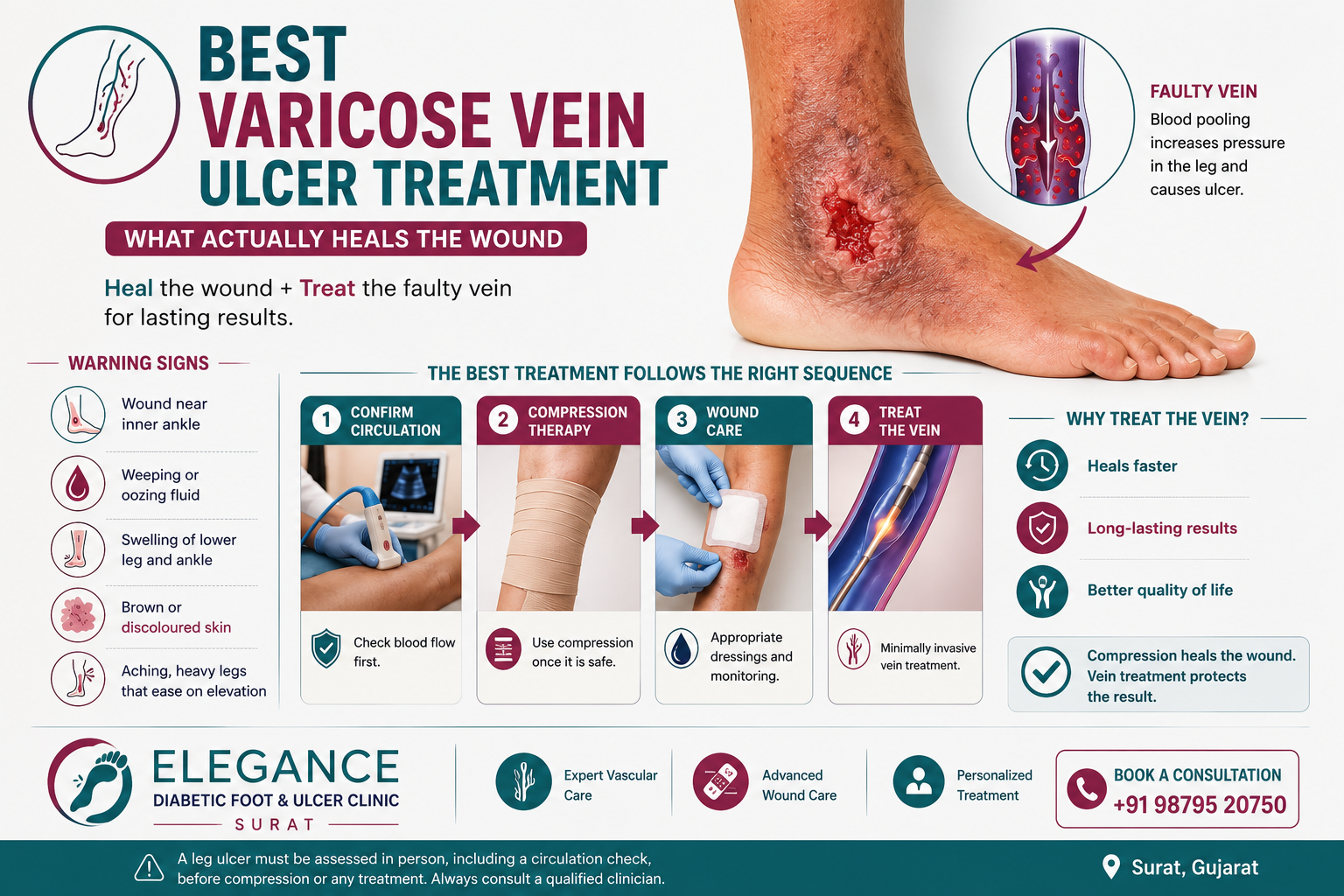
The best varicose vein ulcer treatment does two things together: it heals the open wound with compression and wound care, and it treats the faulty leg vein causing the pressure. Fixing only the wound lets it come back, so the best results come from confirming circulation first, then combining compression with treatment of the underlying vein.
A varicose vein ulcer is a leg wound that keeps returning, and that is the clue to treating it well. It is not really a skin problem, it is a vein problem showing up on the skin. Here is how the best treatment addresses both, in the right order.
What Is a Varicose Vein Ulcer?
A varicose vein ulcer, also called a venous leg ulcer, is a shallow, often weepy wound near the inner ankle caused by faulty leg veins. When vein valves fail, blood pools in the lower leg and raises pressure in the tissues. Over time the skin hardens, discolours, and breaks down into an ulcer that heals slowly and tends to return.
Because varicose veins are the common root cause, treating the wound without treating the vein rarely gives lasting results. That single insight shapes the whole treatment plan.
What Is the Best Varicose Vein Ulcer Treatment?
The best varicose vein ulcer treatment follows a clear sequence rather than a single fix. Each step builds on the one before, and skipping the first can be harmful. The table below outlines the approach used at EDFC in Surat.
| Step | What it involves | Why it matters |
|---|---|---|
| 1. Confirm circulation | Checking arterial blood flow first | Full compression can harm a leg with blocked arteries. |
| 2. Compression therapy | Graduated compression once it is safe | The mainstay that counters pooling and helps the wound close. |
| 3. Wound care | Appropriate dressings and monitoring | Keeps the ulcer clean and supports healing. |
| 4. Treat the vein | Minimally invasive vein treatment | Fixes the root cause and lowers the chance of recurrence. |
At EDFC this is coordinated through vascular services, non-surgical wound management, and the non-diabetic ulcer clinic, with the venous ulcer pathway tying it together.
Why Isn't Compression Alone Enough?
Compression heals many ulcers, but on its own it often lets them return because the faulty vein is still there. This is where treating the vein makes a real difference. A Cochrane review on endovenous ablation for venous leg ulcers found that adding minimally invasive vein treatment to compression improves the time to complete ulcer healing compared with compression alone. In plain terms, treating the vein helps the wound close faster and stay closed.
That is why the best varicose vein ulcer treatment is a combination, not a single therapy. Compression does the healing, and vein treatment protects the result.
What Are the Warning Signs to Act On?
Catching a venous ulcer early makes it far easier to treat, so it helps to know what to look for. Any of the following on the lower leg deserves a prompt assessment.
- A shallow wound around the inner ankle that is slow to heal.
- Weepy or oozing fluid from the wound.
- Swelling of the lower leg and ankle.
- Brown, hardened, or discoloured skin near the ankle.
- Aching, heavy legs that ease when the legs are raised.
How Do You Get Treated in Surat?
Good treatment starts with finding the true cause, not just dressing the wound. At EDFC in Surat, an expert doctor first confirms circulation through assessment and diagnostics, then combines safe compression, wound care, and vein treatment into one plan. Because varicose vein ulcers share treatment principles with other leg wounds, care also connects with peripheral artery disease assessment where needed. Care is led by Dr. Ashutosh Shah, an expert doctor and the team behind India's first dedicated foot and ulcer clinic, which you can read about on the about page. When you are ready, book a consultation.
Medical disclaimer: This article is for general information and education only and is not a substitute for personalised medical advice. A leg ulcer must be assessed in person, including a circulation check, before compression or any treatment. Always consult a qualified clinician. To have your leg assessed, book a consultation at Elegance Diabetic Foot & Ulcer Clinic, Surat.
quiz Frequently Asked Questions
This article is general education, not a diagnosis. If you have a diabetic foot wound, please have it assessed in person. Send a photo on WhatsApp or book a consultation.
About the Author
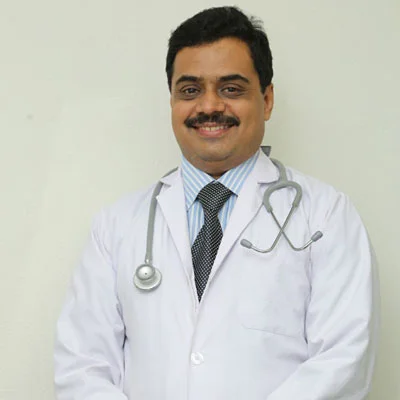
Dr. Ashutosh Shah, Plastic, Reconstructive & Diabetic Foot Surgeon, Elegance Diabetic Foot & Ulcer Clinic, Surat
Dr. Ashutosh Shah is a board certified plastic and reconstructive surgeon with over 22 years of experience and more than 10,000 limbs and feet saved. He founded Elegance Diabetic Foot & Ulcer Clinic, India's first chain of clinics dedicated to foot care, with centres in Surat and OPD partners across South Gujarat. He is known for a limb first approach, safe wound care and ethical, natural results.