Advanced wound dressings are modern materials that do more than cover a wound - they keep it moist, control fluid and bacteria, and actively speed healing. Used for diabetic foot ulcers and other non-healing wounds, types include foam, hydrocolloid, alginate, hydrogel, collagen, and antimicrobial (silver) dressings, chosen to match each wound.
An ordinary gauze dressing only covers a wound. An advanced wound dressing works with the wound to help it close faster and more safely. This guide explains what advanced dressings are, the main types, their benefits, and how a specialist picks the right one - especially for diabetic foot wounds.
What is an advanced wound dressing?
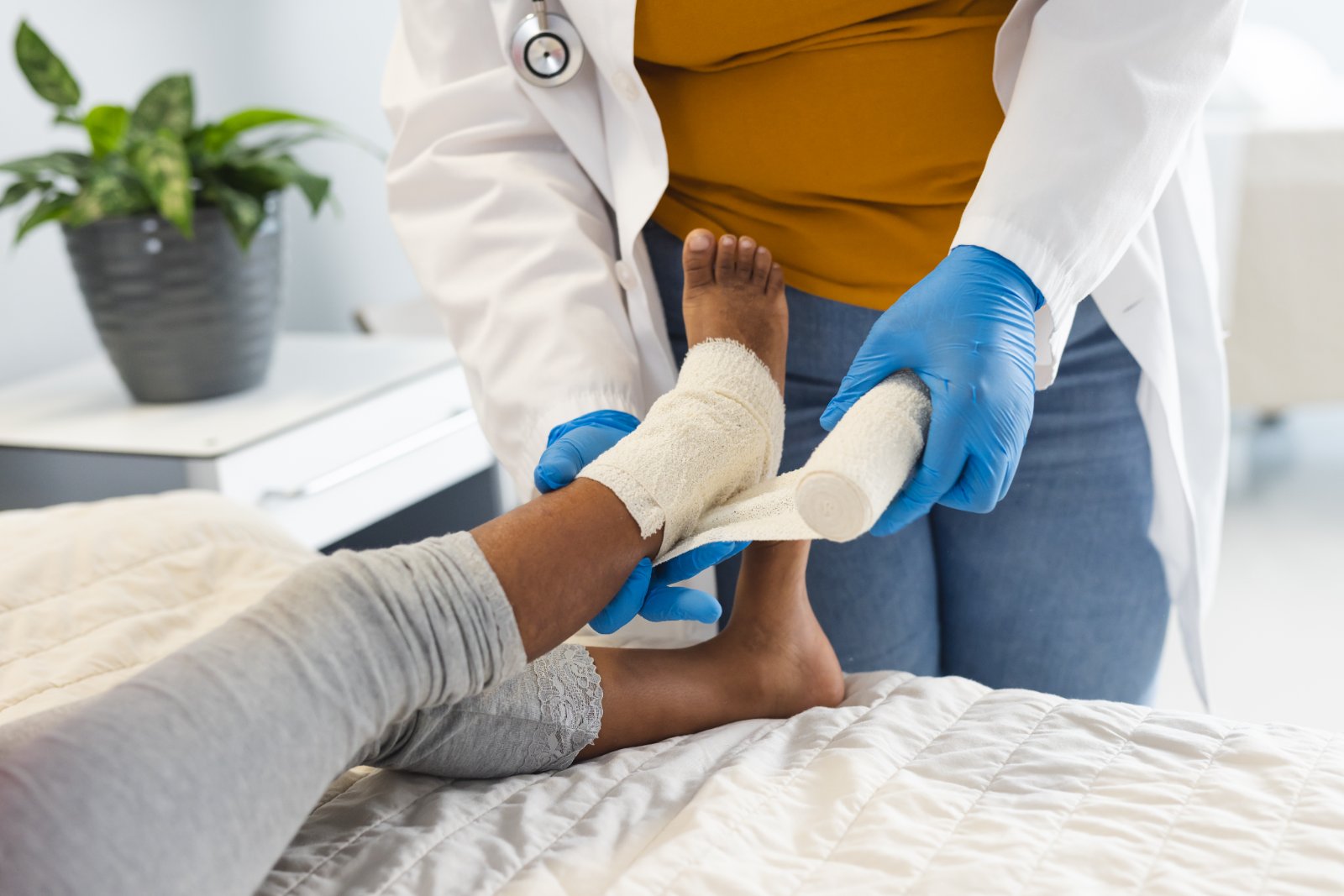
An advanced wound dressing is a modern, purpose-designed material placed on a wound to create the ideal conditions for healing. Instead of just absorbing blood and covering the area, it manages moisture, fluid, and bacteria so the body can rebuild tissue more effectively.
Advanced dressings are built on the principle of moist wound healing - the finding that wounds kept at the right moisture level heal faster than those left to dry out and scab. They are a core part of non-surgical wound management for chronic and diabetic wounds.
How is an advanced wound dressing different from a normal dressing?
A normal gauze dressing covers and absorbs; an advanced dressing actively supports healing. Gauze can dry out, stick to the wound, and need daily changes, while advanced dressings hold the right moisture, come off cleanly, and often stay on for several days.
This means less pain at dressing changes, fewer changes overall, better protection against infection, and faster healing for wounds that would otherwise stall. For a diabetic foot, where wounds heal slowly, this difference can be decisive.
What are the main types of advanced wound dressings?
There is no single "best" advanced dressing - each type suits a different wound. The choice depends mainly on how much fluid the wound produces, whether it is infected, and what stage of healing it is in. The table below summarises the common types.
| Dressing type | What it does | Best for |
|---|---|---|
| Foam | Absorbs moderate to heavy fluid and cushions the wound | Weeping wounds, pressure points |
| Hydrocolloid | Forms a gel, keeps moisture in, supports self-cleaning | Light to moderate, low-risk wounds |
| Alginate | Seaweed-based, highly absorbent, helps stop bleeding | Deep wounds with heavy fluid |
| Hydrogel | Adds moisture to dry wounds and soothes pain | Dry or sloughy wounds |
| Collagen | Provides a scaffold that rebuilds new tissue | Chronic, stalled, non-healing wounds |
| Antimicrobial (silver / iodine) | Lowers bacteria in the wound | Infected or high-risk wounds |
| Negative pressure (vacuum) | Suction removes fluid and stimulates tissue growth | Large, deep, complex wounds |
What are the benefits of advanced wound dressings?
The main benefit of advanced wound dressings is faster, safer healing with less pain and fewer changes than traditional gauze. They actively manage the wound environment instead of just covering it.
- Faster healing by maintaining the ideal moist environment.
- Fewer dressing changes - many stay on for several days.
- Less pain because they are non-adherent and do not tear new tissue.
- Infection control from antimicrobial options that reduce bacteria.
- Fluid management - the right dressing absorbs or adds moisture as needed.
- Gentle self-cleaning that helps clear dead tissue without cutting.
Which wounds need advanced dressings?
Advanced dressings are used for wounds that are slow to heal, deep, heavily draining, infected, or at high risk - the situations where ordinary gauze is not enough. They are especially valuable in diabetic foot care.
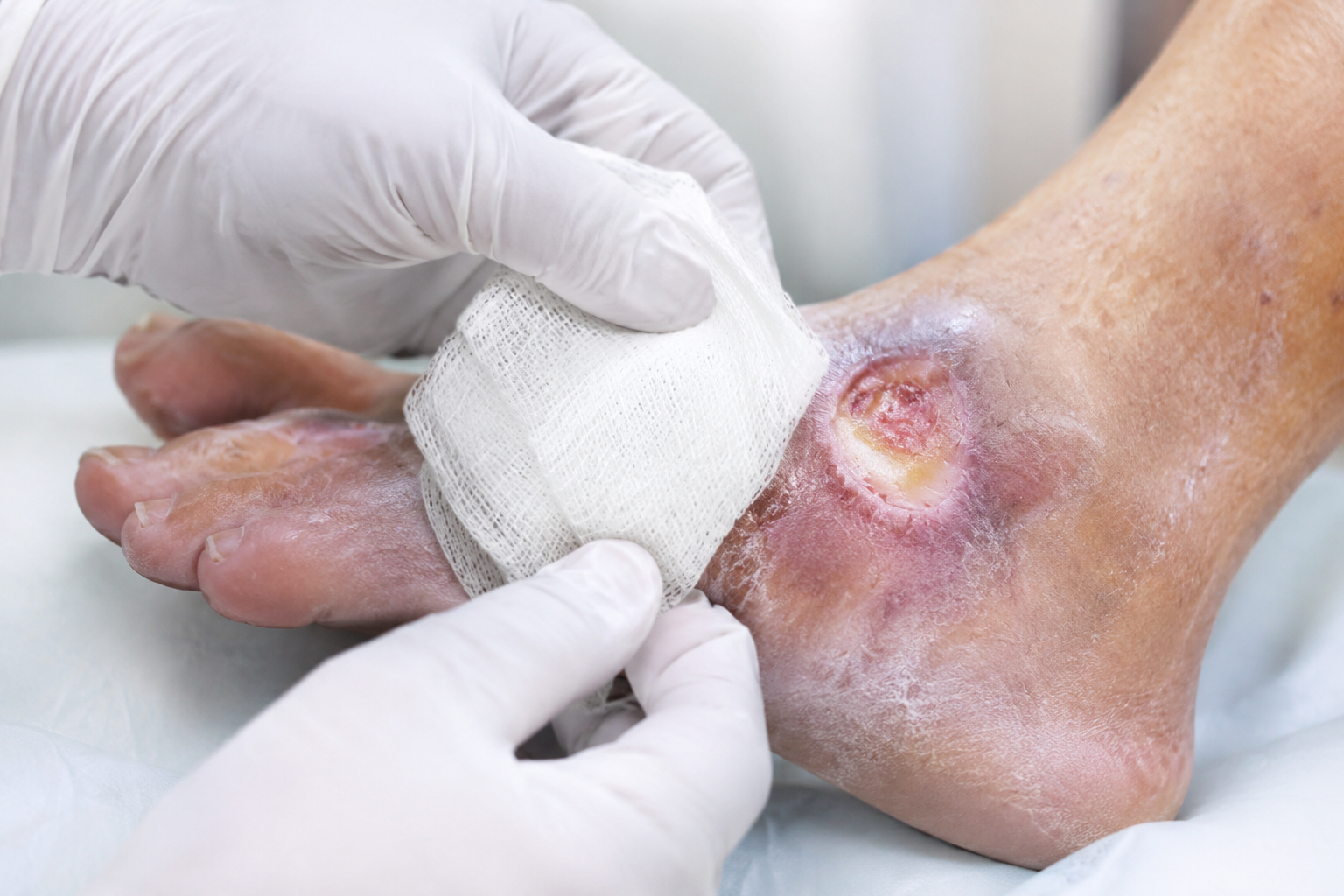
- Diabetic foot ulcers and other non-healing foot wounds.
- Pressure ulcers (bedsores) and venous leg ulcers.
- Surgical wounds that are healing slowly.
- Infected or heavily draining wounds.
- Burns, skin tears, and complex or deep wounds.
How does an advanced dressing help a wound heal faster?
An advanced dressing helps a wound heal faster by holding it at the ideal moisture level, protecting new tissue, and controlling bacteria and excess fluid. In this balanced environment, repair cells work more efficiently and the wound closes sooner.
Different dressings target different problems: an absorbent one calms a weeping wound, a hydrogel rehydrates a dry one, a collagen dressing rebuilds stalled tissue, and an antimicrobial one fights infection. Matching the dressing to the wound is what makes healing both faster and safer.
How is the right advanced dressing chosen?
The right dressing is chosen by a specialist after assessing the wound - its depth, fluid level, tissue, infection, and location. The same wound often needs different dressings at different stages, so the choice is reviewed and changed as it heals.
This is why advanced dressings should not be self-selected from a pharmacy. At a clinic, wound assessment guides the choice, and for a diabetic foot the dressing is combined with treating the cause - offloading pressure, controlling infection and blood sugar, and restoring blood flow.
Are advanced dressings used for diabetic foot ulcers?
Yes - advanced dressings are central to healing diabetic foot ulcers, which are prone to stalling and infection. The dressing keeps the wound in the best state to heal, while the underlying pressure and blood sugar problems are treated alongside.
On their own, dressings do not cure a diabetic foot ulcer. They work as part of a complete plan that includes offloading, debridement, infection control, and blood flow care - which is how a stubborn ulcer is finally closed and the foot is saved.
Advanced wound care at Elegance Diabetic Foot & Ulcer Clinic
At Elegance Diabetic Foot & Ulcer Clinic in Surat, led by Dr. Ashutosh Shah, non-healing and diabetic wounds are treated with a full range of advanced dressings - including collagen, antimicrobial (silver), PRF, and negative-pressure options - each matched to the wound and its stage. The guiding principle is that every wound needs not just a dressing, but the right dressing, alongside treatment of the cause. If a wound has not healed in weeks or months, a specialist assessment is the safest next step.
Heal your wound with the right dressing
If a diabetic foot ulcer or chronic wound is not healing with ordinary dressings, an advanced dressing chosen by a specialist could make the difference. Book a wound-care assessment with Elegance Diabetic Foot & Ulcer Clinic, or send a photo of your wound on WhatsApp for quick guidance on your next step.
This article is for general education only and is not a substitute for professional medical advice, diagnosis, or treatment. Wound dressing choice should be made by a qualified clinician. Please consult Dr. Ashutosh Shah or a qualified specialist about your individual wound.
quiz Frequently Asked Questions
This article is general education, not a diagnosis. If you have a diabetic foot wound, please have it assessed in person. Send a photo on WhatsApp or book a consultation.
About the Author

Dr. Ashutosh Shah, Plastic, Reconstructive & Diabetic Foot Surgeon, Elegance Diabetic Foot & Ulcer Clinic, Surat
Dr. Ashutosh Shah is a board certified plastic and reconstructive surgeon with over 22 years of experience and more than 10,000 limbs and feet saved. He founded Elegance Diabetic Foot & Ulcer Clinic, India's first chain of clinics dedicated to foot care, with centres in Surat and OPD partners across South Gujarat. He is known for a limb first approach, safe wound care and ethical, natural results.