Written by Dr. Ashutosh Shah, Plastic & Microvascular Surgeon - Foot, Ankle & Limb Salvage Specialist, Elegance Diabetic Foot & Ulcer Clinic (EDFC). Practising since 2004 (22+ years). Read full bio.
Medically reviewed by Dr. Ashutosh Shah · Published 31 July 2026 · Last reviewed 31 July 2026.
An Achilles tendon rupture in Nellimarla usually announces itself with a sudden snap or pop at the back of the ankle, followed by sharp pain and an inability to push off or stand on tiptoe. It is not something to "walk off" - a torn Achilles needs prompt diagnosis, and the sooner it is treated, the better the outcome.
Most people who rupture their Achilles tendon are not expecting it. It often happens mid-activity - a sudden lunge, a push off the foot during sport, or even a missed step - and the moment is usually memorable. In this guide, Dr. Ashutosh Shah walks through how to recognise a rupture, what to do in the first hour, and how it is treated.
Do you actually have a ruptured Achilles? The signs to check
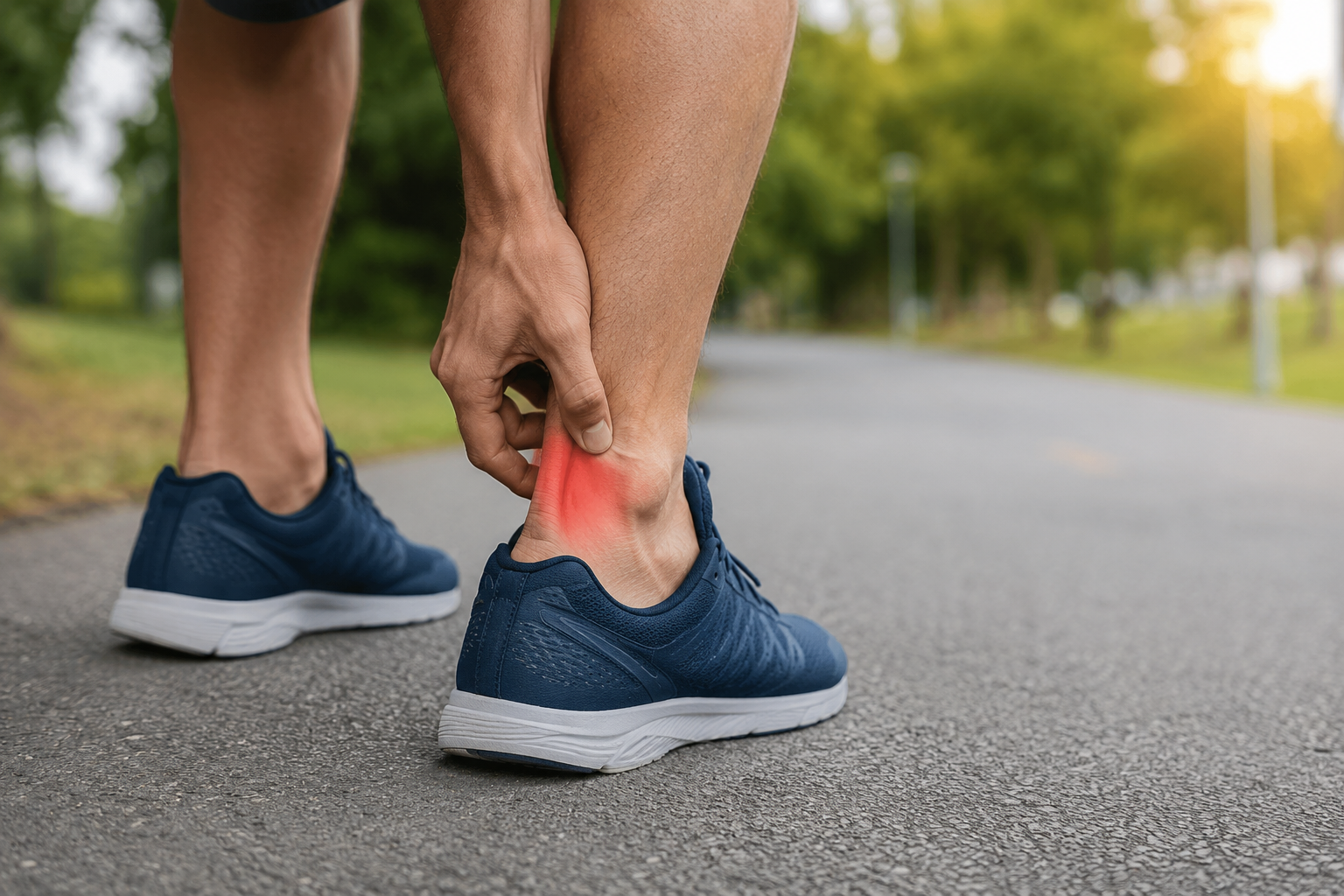
The tell-tale signs of an Achilles tendon rupture are a sudden pop or snap felt at the back of the ankle, immediate sharp pain, swelling, and a noticeable weakness pushing off the foot when walking.
- A sudden pop or snap - some describe it as feeling like being kicked or hit in the back of the ankle.
- Sharp pain at the back of the heel or calf, which may ease after the initial moment.
- Swelling and bruising that develops around the ankle and heel.
- Difficulty standing on tiptoe or pushing off the injured foot.
- A gap or dent that can sometimes be felt just above the heel bone.
If you notice most of these together, treat it as a probable rupture until a doctor confirms otherwise.
What should you do in the first hour after injury?
In the first hour after a suspected Achilles rupture, stop all activity, avoid putting weight on the foot, apply ice, and keep the ankle elevated while you arrange to see a doctor the same day.
- Stop moving on it. Every step on a torn tendon can worsen the gap between the torn ends.
- Ice the area in short intervals to limit swelling.
- Elevate the foot above heart level where possible.
- Avoid stretching or testing it - don't try to "check" the injury by flexing the foot.
- Get it assessed the same day. Early diagnosis widens your treatment options.
What causes an Achilles tendon rupture?
An Achilles tendon rupture is usually caused by a sudden forceful movement - such as sprinting, jumping, or an abrupt change of direction - especially in a tendon already weakened by age, prior injury, or certain medications. It can also happen from a fall or a misstep off a kerb.
| Risk factor | Why it matters |
|---|---|
| Age 30-50, occasional sport | Tendon is less flexible but still under high load ("weekend warrior" pattern) |
| Previous Achilles pain or tendinitis | Tendon fibres are already weakened |
| Certain antibiotics or steroid injections | Can weaken tendon tissue |
| Sudden increase in activity | Tendon not conditioned for the new load |
| Poor footwear or hard playing surface | Adds extra strain at push-off |
How is a torn Achilles tendon diagnosed?
A torn Achilles tendon is diagnosed mainly through a clinical exam - including the calf squeeze test, where the ankle fails to move if the tendon is fully torn - and confirmed with an ultrasound or MRI when needed to plan treatment.
The calf squeeze test is simple and fast: with you lying face down, the doctor squeezes the calf muscle. In an intact tendon, the foot points downward; in a rupture, it does not. Imaging is then used to see the size of the tear and how far apart the tendon ends are, which helps decide between surgery and non-surgical care.
Surgery or no surgery - how is an Achilles rupture treated?
An Achilles tendon rupture can be treated either surgically (repairing the torn tendon and stitching it back together) or non-surgically (immobilising the foot in a cast or boot to let it heal naturally) - the right choice depends on your age, activity level, and how the tendon ends line up.
| Approach | What it involves | Typically suited to |
|---|---|---|
| Surgical repair | Tendon ends stitched together, sometimes reinforced | Younger, active patients; complete or wide tears |
| Non-surgical (cast/boot) | Foot held in a pointed-down position, gradually adjusted | Older or less active patients; certain partial tears |
| Minimally invasive repair | Smaller incisions, quicker recovery of the wound | Selected cases where anatomy allows |
Both routes require months of structured rehabilitation - the choice of surgery versus casting affects re-rupture risk and calf strength recovery differently, so this decision is best made with a specialist who has reviewed your imaging.
What does recovery look like?
Recovery from an Achilles tendon rupture typically spans four to six months, moving through protected immobilisation, a gradual return to weight-bearing, and then structured physiotherapy to rebuild calf strength before returning to full activity.
- Weeks 0-2: Foot protected in a cast or boot, no weight-bearing.
- Weeks 2-8: Gradual, controlled weight-bearing as the tendon heals.
- Months 2-4: Physiotherapy begins, rebuilding range of motion and strength.
- Months 4-6+: Progression toward normal walking, then sport-specific activity if relevant.
Rushing this timeline is one of the most common causes of re-rupture, so recovery pace should be guided by your surgeon, not by how good the ankle feels.
When is an Achilles injury an emergency?
An Achilles tendon injury needs same-day medical attention whenever there is a sudden pop, inability to bear weight, or a visible gap above the heel - waiting longer allows the torn ends to separate further and can limit treatment options.
Numbness, a cold or pale foot, or signs of an open wound alongside the injury call for emergency care immediately, as these suggest additional damage beyond the tendon itself.
Achilles tendon care for Nellimarla
Elegance Diabetic Foot & Ulcer Clinic (EDFC) treats foot and ankle injuries including Achilles tendon ruptures from its centre in Surat, with a new Centre of Excellence opening in the Nellimarla area for foot, ankle, and limb salvage care. If you are in Nellimarla and suspect an Achilles tendon rupture, send a clear photo or video of the injury to our team on WhatsApp for initial guidance, and book an assessment to confirm the diagnosis and discuss the right treatment path.
Follow EDFC on Facebook, Instagram, and YouTube for foot and ankle care guidance.
Medical disclaimer: This article is for educational purposes only and is not a substitute for professional medical diagnosis or treatment. If you suspect an Achilles tendon rupture, seek prompt in-person assessment. Please consult Dr. Ashutosh Shah or a qualified specialist about your condition.
quiz Frequently Asked Questions
This article is general education, not a diagnosis. If you have a diabetic foot wound, please have it assessed in person. Send a photo on WhatsApp or book a consultation.
About the Author

Dr. Ashutosh Shah, Plastic, Reconstructive & Diabetic Foot Surgeon, Elegance Diabetic Foot & Ulcer Clinic, Surat
Dr. Ashutosh Shah is a board certified plastic and reconstructive surgeon with over 22 years of experience and more than 10,000 limbs and feet saved. He founded Elegance Diabetic Foot & Ulcer Clinic, India's first chain of clinics dedicated to foot care, with centres in Surat and OPD partners across South Gujarat. He is known for a limb first approach, safe wound care and ethical, natural results.